Models Monday: I’m Done

Reshard Mendenhall
Rashard Mendenhall

Rashard Mendenhall played running back for the Pittsburgh Steelers for four years before being picked-up by the Arizona Cardinals. Now, at 26-years-old, he’s decided to retire. Mendenhall wrote a wonderful blog post for The Huffington Post about his decision. Skeptics presume that his decision is based on his desire for a larger contract, but Mendenhall’s own claims make more sense to me. In his post, he offers that he’s done as much as he wants to do in football and would now like to pursue his interests in “dance, art, and literature.” Mendenhall represents those of us who are quite comfortable knowing when we’ve had enough; who can admit when what the culture tells you is good doesn’t feel that way to you; who find it worthwhile to explore other areas of life we may find interesting; who can say, “I’m done.”

If what you enjoy in life and about life aligns with what the culture holds in high esteem, fine. For many of us, however, this alignment doesn’t hold. When such congruency fails to hold, being honest with one’s self about this rift opens up a path to worthwhile experiences that might just facilitate a higher quality of life. Rashard Mendenhall definitely offers a model for making a life from the materials and elements you find valuable and being honest about the stuff others tell you makes it so. I’m looking forward to seeing where Mendenhall goes next because it might actually be more interesting than having to listen to another former athlete offering commentary on ESPN or the NFL Network about the latest game through the lens of their own glory days.

Models Monday: Women’s History Month

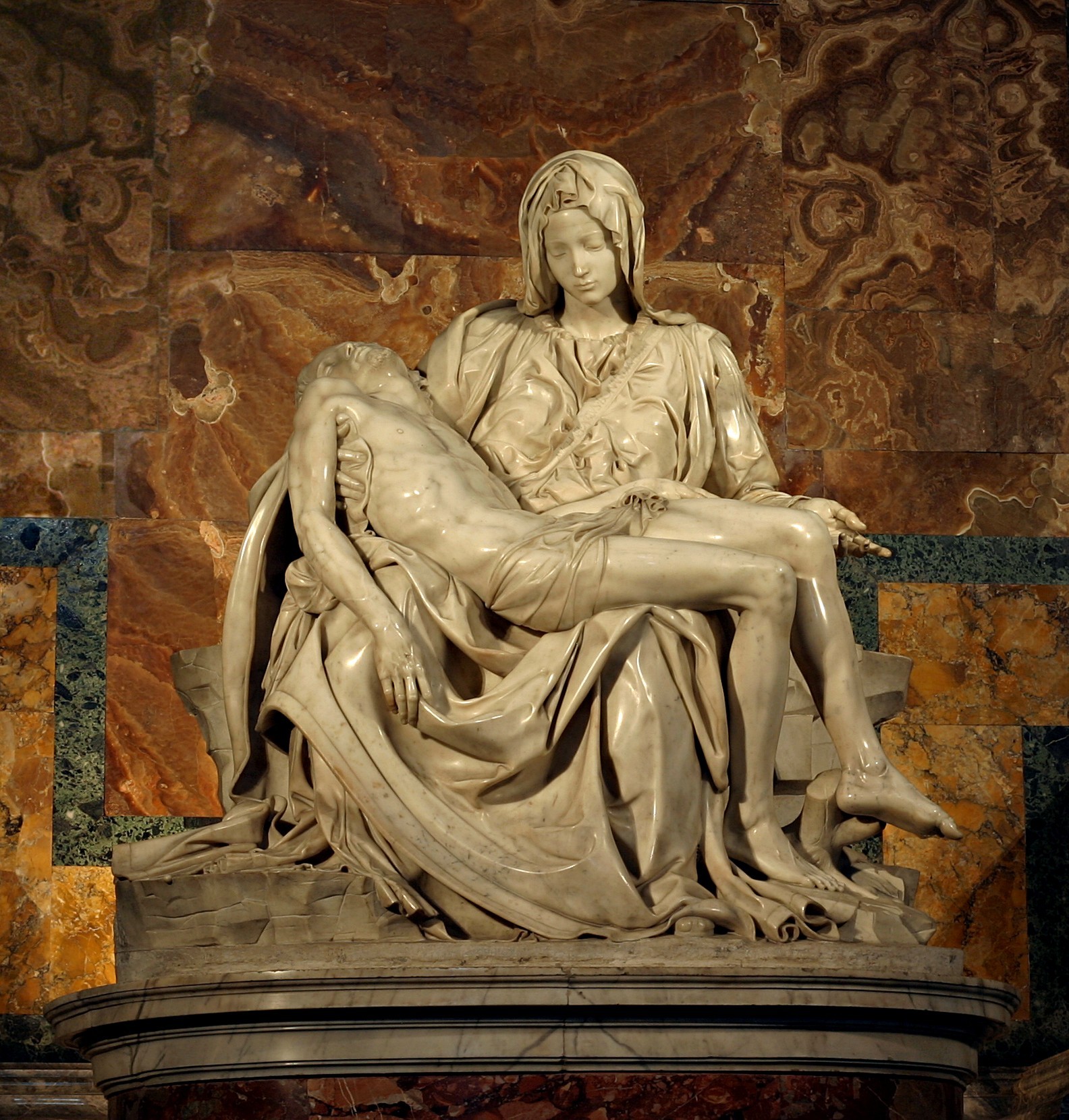
Michelangelo's Pieta, 1498-1499
Michelangelo’s Pieta, 1498-1499

Like Black History Month, Women’s History Month began as a week long celebration. Though this national dedication began in 1981, before being extended to a month in 1987, I have no memory of women’s history being marked until the mid-nineties–and even then, I thought it was a reactionary effort to somehow challenge February as a month set aside to honor and acknowledge black American men and women. It’s interesting that even while I attended an all-girls high school, Women’s History Month was never acknowledged in any way; I’m not sure why. Certainly my high school didn’t diminish women’s work, labor, talent, skill, and ideas…maybe they just assumed that the school itself paid homage to women’s strengths and capacities.

From what I’ve observed, celebrations of Black History Month tend to be celebrations that list black achievements and as I’ve listened to radio commentary that acknowledges Women’s History Month, the focus appears to be on where women can work. If you know a woman or a girl and you’re not encouraging them to enter a STEM field, you’re doing them a disservice because a girl’s goal should always be on showing men that women can do what they can do…blah, blah, blah. I don’t have anything against Science, Technology, Engineering, or Mathematics, but I do think too much emphasis gets placed on how hard and difficult those fields are to master. These fields are highly remunerated and often well-respected professions so if you’re prepared to work in the STEMs, like to work in the STEMS, employed to work in the STEMs, what’s so hard about that?

I don’t have a daughter, but I know lots of little girls and I care about girls and I can never see myself becoming deeply invested in whether or not girls enter a STEM field. Instead, I think about how much emotional, psychic, and spiritual strength girls, particularly black girls, are going to need to bear the weight of all the tragedy they’re in store for through their own vulnerability or the vulnerability of their loved ones. Concentrating on preparing girls to enter a STEM field will not prepare them to watch the man who killed her son, brother, father, uncle, friend, neighbor, classmate, or cousin go free. Where a woman works may not prepare her to take in the brutalized flesh of her only son–something Mamie Till-Mobley, Emmett Till’s mother and Jacqueline Johnson, Kendrick Johnson’s mother, both did; the mistrial that insulted Lucia McBath, Jordan Davis’s mother, Dominika Stanley, Aiyana Stanley-Jones’s mother had already suffered and both were reminders of what Latasha Harlin’s aunt Denise (Latasha’s mother was murdered in a nightclub before Soon Ja Du killed Latasha) endured; I’m not very optimistic about Denise McBride, Renisha McBride’s mother, seeing a better outcome than her predecessors and I’m also not sure how much their model will help her.

Many fathers, uncles, brothers, friends, cousins, and neighbors also suffered losses alongside these women, but during Women’s History Month, as I am beginning to think about it, the figure of the mother, like Michaelangelo’s Mary bearing the weight of her dead son, figures most prominently. Mary. Mary. Mary…”tell Martha not to moan.”

The price of redemption never stops being a mother’s weight to bear–or so it seems. Science, Technology, Engineering, and Mathematics don’t seem so hard when compared to living in a world where you constantly fear carrying the weight of your dead child…I never want to have to be so strong.

Models Monday: Energy

Several weeks ago, I was invited to attend a meeting with other professionals about programs my community plans to implement. As I hold key positions in these programs, my input regarding the implementation and the expected outcomes concerning a problem we all agree on, justified the invitation. After my talk, the woman who invited my participation discussed the energy found at the base of these programs, the energy that suggested promise regarding the success of these programs, and the energy the could be derived from my leadership. I was completely taken aback. The last time I remember having energy was when I was about 18 years-old–when I only needed to be concerned about myself and my interests, and my pursuits. As a black woman with a five-year-old child, a husband, a house, a job, and who is about as close to turning forty as one can get, being described as “energetic” estranges me from myself. In fact, this description estranges me from every black woman I know: those who are single; those who rent; those without children…I don’t know any black woman who does not work in some form or fashion. I know black children who may be described as “energetic.” My next door neighbor was playing with my son on Saturday and I would be comfortable describing them as “energetic,” but fully grown, black women? I’m not denying that these black women exist, but I sure don’t know ’em.

Energizer_Bunny

When I think of “energy” as an enactment of vitality, I don’t think about black women A-Tall, I think about that pink, Energizer Bunny that has been going nonstop since 1989. Unlike the lifeless bunny whose batteries can be replaced within minutes, it takes black woman much, much longer to be revitalized. Given the labor we are constantly being asked to perform at home…o.k., EVERYWHERE, I know very few black women who I would call revitalized. Every black woman I know seems to be in recovery from fighting “to make a dollar out of fifteen-cents,” from living within a system of domination, and from being conscripted into service for others time and time again. So if it is the case that I look like the embodiment of “energy” it is because I have honed the skill of making exhaustion appear attractive. To that end, every black woman I know can lay claim to being a master craftsman who turns a Sisyphean task into a work of art.

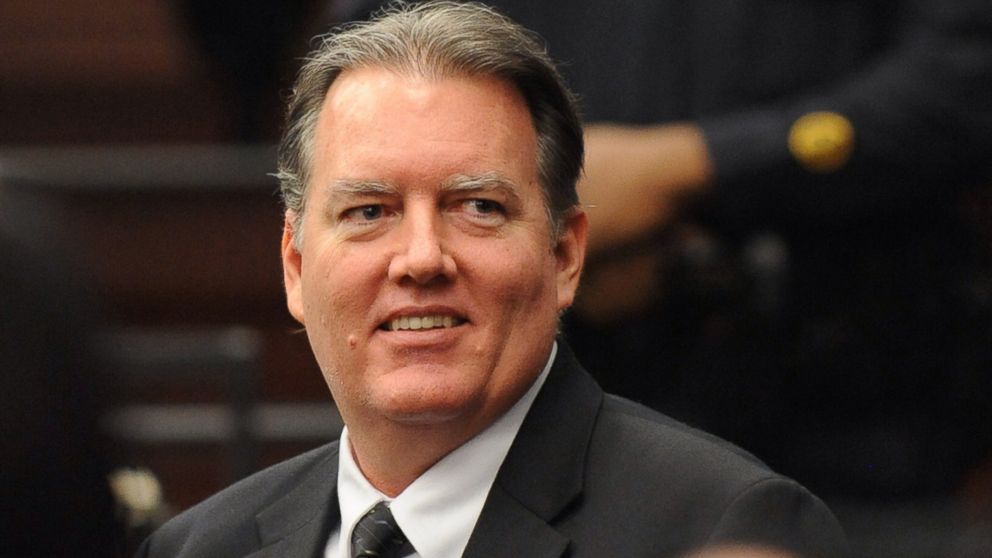
Michael Dunn Plans to Fight

Michael Dunn found guilty of
Michael Dunn convicted of three charges of attempted murder.

Unlike the 33 law students who I previously wrote about, I imagine the greatest challenge of attending law school being learning how to translate seemingly pedantic words into judicial significance. To that end, while the attempted murder conviction in the Michael Dunn trial for the three boys who managed to live makes sense, it doesn’t make sense, to me, that there could be a mistrial regarding the actual fact that Jordan Davis is dead from the bullets Dunn fired.  It’s not clear to me how a man who claims he initiated a confrontation over the volume of the “thug music” that Jordan Davis and his friends were listening too, who believes the teens reached for a gun, and then in response claims to have then reached into his glove compartment and fired ten times before the armed teens fired a single shot, isn’t found guilty of deliberately and willfully killing someone.

Poor use of language underscores one of my many frustrations regarding both the George Zimmerman trial and the Michael Dunn trial. According to Juror B-37 in the Zimmerman case, Trayvon Martin “played a huge role in his death.” Continuing with this foolishness, Juror B-37 tells Anderson Cooper:

“He could have…When George confronted him, and he could have walked away and gone home. He didn’t have to come back and do whatever he did and come back and fight.”

It never occurs to this woman that “George” was not entitled to confront Martin or that Trayvon Martin would have just “walked away and gone home” if “George” had not prevented him from doing so. Neither does she consider that the story of Martin “[coming] back and [doing] whatever he did” is Zimmerman’s account of how he murdered Trayvon Martin. This woman merely assumes Zimmerman’s credibility rather than requiring that he earn it. Juror B-37 is so inarticulate that one has to understand how systems of domination inform her remarks for them to be intelligible. For example, every individual plays a “huge” role in their death; without you first having life, you cannot meet your own death–you have to live to die. Martin left his home to purchase snacks, he didn’t plan to get himself killed by a stranger. He wanted to go home and was in fact heading there until George Zimmerman lethally ended his trip. The scenario Juror B-37 constructs only makes sense if black people are always responsible for what white people think of them; that black people should feel compelled to account for their whereabouts to any white person at anytime and in anyplace; that black people cannot feel threatened, and if they do, they can’t defend themselves.

Now, according to Juror B-37’s logic, Michael Dunn “could have [driven] away and gone home.” Dunn didn’t live next door to those teenagers, they were all in cars so why couldn’t he have just driven away? So in this scenario, Juror B-37 is on to something, but in this case, Dunn driving away and moving beyond the situation seems meaningless. Moreover, just like Juror B-37, the Assistant State Attorney, John Guy, assumes that what the perpetrator alleges, accurately and honestly conveys what Davis said or didn’t say. Thus, Guy’s claim that Jordan Davis “didn’t have a weapon, he had a big mouth” ignores the fact that the defendant, Dunn, might just lack credibility. It’s not clear to me that Davis “had a big mouth.” What exactly makes Michael Dunn credible? This is a man who felt entitled to tell strangers in another vehicle how loud they were allowed to play music that he dislikes, who wounded three teenagers and killed one, and who then goes to a hotel with his girlfriend and orders pizza?!

With the verdict, both the State Attorney, Angela Corey, and Dunn’s attorney, Cory Strolla, plan to fight the verdict. We can only pray that they plan on leaving their guns at home.

Models Monday: Lord Have Mercy (Part II)

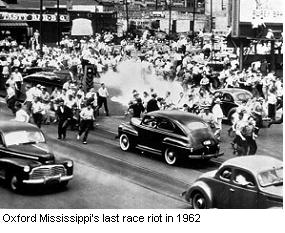
Now these young black people are in law school but there’s no evidence that they know anything about the Brown v. Board of Education decision, the Little Rock Nine, James Meredith, or Autherine Lucy. Ask Elizabeth Eckford about how lonely she felt in 1957 when she tried to enter Little Rock Central High School while having to endure the threat of a bloodthirsty white mob. Maybe these students need to consider how welcoming James Meredith found enrolling at Ole’ Miss in 1962.

What better way of saying we're happy to have you here than with a riot.
What better way of saying we’re happy to have you here than with a riot.

Perhaps these law students need to consider how Autherine Lucy’s experience of fighting to gain entry into the University of Alabama predated the riot as welcoming party that greeted Meredith six years later. If anyone had the right to complain about hostility and estrangement within the context of a learning environment, it was folk like Eckford, Meredith, and Lucy. In the face of outright hatred, violence, and contempt these black students fought back anyway. I don’t disagree with the 33 black law students at UCLA about the white supremacist violence they’re confronting, but I don’t support how they’re responding to it. They’re not clearly presenting their concerns through the language and tools they should be equipped with as graduate students to make it pointedly clear that they are even engaging with problems posed by systems of domination. So while they’re in law school, they’re censoring what they say, in their own film, despite their recognition of the first amendment. Too, you don’t need any of your law school colleagues to like you, welcome you, listen to you, or respect your ideas to graduate from school–and that’s true whether we’re talking about kindergarten or law school. The concerns of these law school students suggest that they want to be liked, welcomed, heard, and respected because they want the perceived perqs of being the teacher’s pet instead of being the outcast and thus recipients of the disadvantages of disfavor. Thus, these students don’t want to dismantle an unjust system, they want this system to work to their advantage; shouldn’t this be a problem for law school students?

Black people don’t have to fight to attend any school in the United States of America because the Brown decision affirmed that segregation in schools was unconstitutional; now, whether or not you feel that you “belong” there is on you. You have a “right” to be at the school you choose, but feeling like you “belong” there is something altogether different. So let’s say that “belonging” to this “community” that you regard as hostile and unwelcoming is something you want, why not agitate against their hostility. These young black students, however, never seem to think that agitation is an option (and they want to become attorneys)–they never seem to think that they can have another idea about their relationship to school. Why can’t they simply “go” to that school and consider “belonging” somewhere else; like somewhere less hostile and more welcoming? It’s a bad idea to think that you’re going to be loved everywhere you go. Ones youthful experience of making friends should have taught you that you have the power to put together your own community of people who welcome and embrace you.

When I was taking those god-awful feminist theory courses with those silly women who wanted to know if they could bake cookies and still call themselves feminists, I never wanted to have anything to do with them; not in class and certainly not beyond it. I wrote more notes to myself about how foolish they were than I ever took notes regarding the material. I had my own community of friends who I could discuss ideas with–and being in graduate school was not necessarily indicative of one’s ability to be communicative over ideas. If you cannot translate your understanding of ideas that matter to those you like, love, and respect then you should feel very insecure about your claim to understanding the material. Working to complete an advanced degree should prepare you to speak to multiple communities, not fewer ones.

Finally, I hate the name of this film: 33. 42 made sense for a movie about Jackie Robinson–but even then, the number represented a person with a name and a legacy much richer than his jersey number. Why would you give yourself a name that references a status that your film describes as degraded and marks suffering without acknowledging an intention to create social change? To that end, identifying with the Little Rock Nine bears witness to the sacrifices of young black people to make this country responsible for honoring its laws for all Americans. These nine students did not have faculty like Kimberle Crenshaw and Cheryl Harris as instructors; instead, their teachers advocated for segregation and state’s rights.  I was recently at an event where Kimberle Crenshaw was the featured speaker and one of the things she noted is that black students seldom take her classes, visit her during office hours, or ask her for letters of recommendation. Even though Brenda Stevenson, Patricia Turner, and Robin D. G. Kelley–to name only a few-are not located in the law school at UCLA, I’m sure those 33 law school students could get with them during office hours…but there’s no evidence that these students even  know who these prominent scholars are; Lord have mercy.

Models Monday: Lord Have Mercy

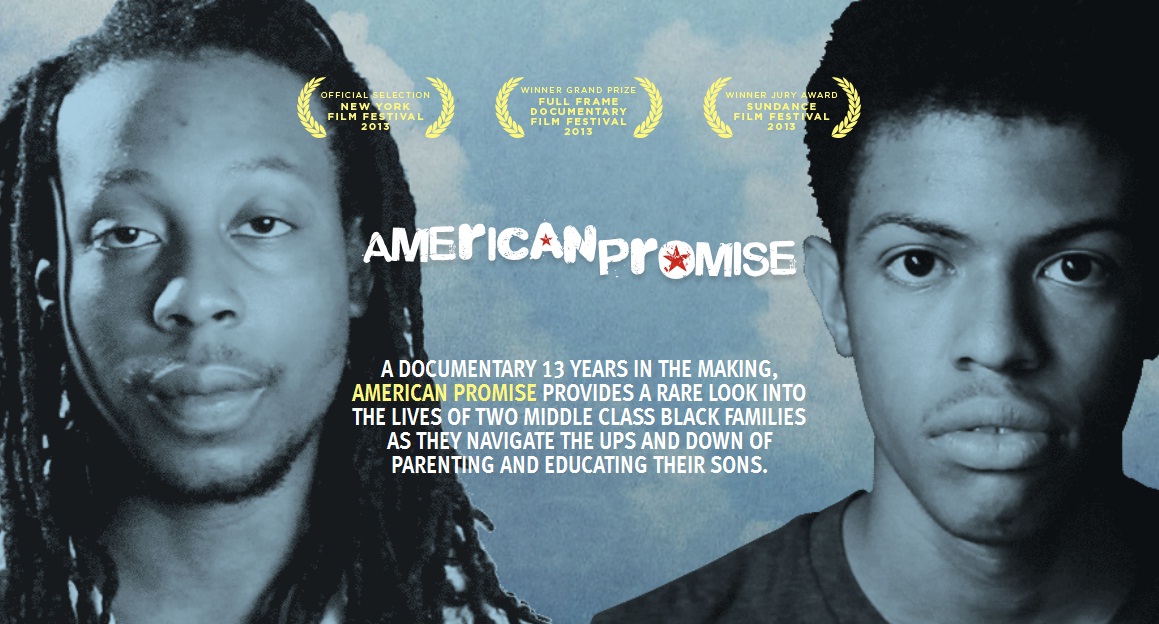
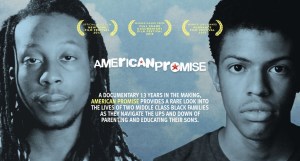
AmericanPromise

Now that I’ve stopped shaking my head, I can actually focus on the many problems with the documentary film American Promise–the title alone is problematic. What promises has this country ever fulfilled with respect to black Americans? Remember those 40 acres we were supposed to get? With the assassination of Abraham Lincoln, Sherman’s January 1865 promise of “40 acres” of former Confederate land to freed people was returned to white southerners after May 1865 in an effort to placate their defeat. Many black farmers were exploited as sharecroppers who leased land from white land owners who were then responsible for paying farmers through a share of the profits from the crops. Even for those black farmers who were able to work their own land and yield a profit, success was a dangerous affair. Hostile white famers were poised to take away land from black farmers and force them to work as sharecroppers. Black farmers could also be killed. That American promise didn’t pan out.

Remember that promissory note that Martin Luther King, jr. interpreted through civic promises made through the Declaration of Independence? Well, long before King describes his “dream” in his famous speech before the Lincoln memorial, he offered a stinging critique of America’s promise to all its citizens by describing the limitations of America’s promises as he saw them in 1963. “It is obvious today,” King notes, “that America has defaulted on this promissory note, insofar as her citizens of color are concerned. Instead of honoring this sacred obligation, America has given the Negro people a bad check, a check which has come back marked ‘insufficient funds.'” Historically speaking then, an American Promise holds as much possibility for fulfillment as a pipe dream.

So perhaps the parent filmmakers chose the title American Promise as the hope these young black boys reveal through their ability to thrive in a “rigorous, academic environment.” Both Idris and Seun appear to be very sweet young men, but I don’t have much faith in their ability to bring about social change; they’re too committed to the idea that another’s perspective has greater integrity than their own–and their parents support this faulty view. To that end, Idris’s parents allowed a secretary from The Dalton School to call their home to tell them that Idris was dropping ‘bows on his helpless, innocent classmate. Idris then offers his side of the story and reveals what this boy did to him and how he offers an equally childlike response, but instead of the school recognizing this interaction as childs-play, Idris received one day of suspension for assaulting his classmate and another day for lying about his behavior. Other than shake their heads, Idris’s parents failed to intervene on his behalf.

This combination of recognizing the racist aggression directed towards Idris, as well as Seun, and never confronting the authorities whose policies and procedures create the atmosphere of cruelty and violence against these children was deeply disturbing. If you already recognize that racism is routinely directed towards people of color, what is the point of using your child to prove what you already understand? Also problematic is the mechanism used to record the boys’ matriculation. Why would you use the same surveillance techniques used within a context of domination to monitor and thus curtail the freedom people of color might experience as a model for “documenting” your own child’s life?

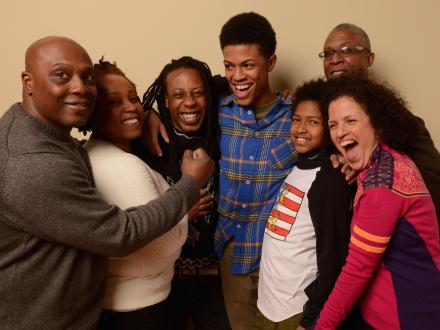
270988807

I wasn’t impressed with The Dalton School or the claim the parents made about their children receiving a “good” education, at an “elite” school, that would enable their “success.” I did not hear these parents engage their children over a single intellectual question. Nearly everything the parents asked their children or discussed with their children was procedural in nature: “Why aren’t you more organized?” “How could you forget that book at school?” “When are you going to become more responsible?” “Why don’t you work harder? Hustle more?” These procedural things were the only questions posed to these children. I never heard a discussion about the books the students were assigned for school; and frankly, the in-class discussion about Tennessee Williams’s Streetcar Named Desire didn’t sound like the play I read. From their discussion, I barely even recognized it. Ralph Ellison’s Invisible Man at least captured what I recognized as aspects of the story, but then this discussion diminished the possibility for the narrative to act as a prism through which to examine multiple forms of inflicting violence.

Though Idris’s parents take great pride in having earned their undergraduate and graduate degrees from ivy league schools, the influence of these schools on how they prepare their son for developing an intellectual life is quite limited. To that end, even though they live in New York, the film doesn’t suggest that they ever attend plays, lectures on college campuses, visit the library, attend live musical performances or art exhibitions; too, while Idris expresses great interest in basketball, the film suggests that he doesn’t watch basketball games on television or that he has ever gone to college basketball games or professional ones. It’s not clear to me how people who value their own “elite” education, have not embraced the value of extending the boundaries of the classroom into other sites.

One of the most important lessons that I learned from this film is to beware the trap of “diversity.” Adding a few black, latino, and asian kids to the population allows a school to claim their investment in creating an inclusive learning environment. “Diversity” serves the institution not necessarily the students. Instead of “diversity,” I’m more interested in schools that are advocating for social change and that are invested in dismantling systems of domination. I’m sure such schools are hard to find, but locating such a place may not be necessary if you prepare your child to value inquiry and artful thinking. American Promise never suggests that developing an oppositional consciousness is meaningful, is aligned with “success,” connected to living a worthwhile life…and all I know to say about that is, “Lord have mercy.”
NY Times Op-Doc about Jordan Davis (Continued reflections on black boys)

If you haven’t done so already, I recommend viewing Orlando Bagwell’s New York Times Op-Doc When Loud Music Turned Deadly. I also recommend what really amounts to Bagwell’s artist’s statement as an accompaniment to this short film about the coldblooded murder of  young Jordan Davis. The documentary would have been much longer if Bagwell had the time to report and to interrogate the significance of Michael Dunn ordering pizza to enjoy with his girlfriend instead of calling the police after he killed Davis, but this exclusion does not lessen the power of the film. This impact stems from the way it asks us to mourn the loss of this much loved child in a country that still sees black boys and black girls as “worthless human beings.” The documentary asks us to examine the conundrum black parents continue to face in rearing their children to love themselves and to know that some folk love them, while at the some time recognizing that DuBois’s reflections of this country’s regard for black life still holds. In January 1913, DuBois wrote an editorial for the Crisis magazine noting that:

There are far too many, North and South, who would preserve one foolish white woman if it costs the degradation of ten innocent colored girls, and who would greet the death of every black man in the world with a sigh of infinite relief.

Mamie Till-Mobley, Emmett Till’s mother, recalled doing everything imaginable to prepare her son for the sadistic, predatory will to “sigh” awaiting his arrival in Mississippi during the summer of 1955. In her memoir, Death of Innocence: The Story of the Hate Crime that Changed America Mrs. Till-Mobley recalls her past conversations with Emmett about race and decides this:

This was the first time I had ever really spoken to Emmett about race. I was giving him some pretty strong instructions about how to avoid problems but, before this, there had never been any reason for race to come up in any way. So, I wondered whether I had done enough to make up for all I had never had to do before. After all, how do you give a crash course in hatred to a boy who has only known love? (102)

I hope that Mrs. Till-Mobley eventually found some relief in accepting that she had done all she could to save her son. Her love for Emmett was so great that she offered him to us all as evidence of the ugliness and brutality of white supremacy. Mrs. Till-Mobley clearly understood that Emmett was not safe; Mr. Davis also knew this and tried to prepare his son for this reality. Both cases show us that preparation, however, doesn’t always save us. Despite what Jordan Davis knew or understood, Michael Dunn callously murdered him anyway.

Certainly, we should continue raising black children to recognize the many ways they will confront violence. How they will be skillfully assaulted by teachers who ignore them and diminish or dismiss their intellectual abilities; how they will be killed for listening to music that someone else dislikes; how they will be gunned down after buying iced-tea and skittles or for having the nerve to knock on someone’s door seeking assistance; how they will be murdered in their own beds when police officers on reality shows want to show how tough on crime they are. Yes, we need to remind black children that the world is lying in wait for them, but we MUST continue to attack white supremacist violence that prepares the ground for black women and men, black girls and boys, to be reaped in the killing fields of our homeland.

Models Monday: The Announcement

Well, the time has finally come for us to determine whether or not the Dalton School is as problematic as I suggested in a previous post. Will Idris demonstrate the verbal dexterity, that I believe, an “elite” school should foster? Will we see the confidence his parents suggest results from being educated in an “elite” school? Will we discover a new model of parenting worthy of emulation or will we discover (another) one to disavow with respect to preparing children to value inquiry? Will we see a progressive model of social change evident in the school that prepares students to resist and dismantle systems of domination (I must admit, it was hard for me to keep a straight face while typing this sentence)?

American Promise premiers on PBS this evening, and it also appears to be available on-line from February 4, 2014–March 6, 2014. Let’s tune in and see what an “elite” school looks like for black boys…

Models Monday: No Explanation Necessary

I just left a very lively, engaging conversation with a very prominent legal scholar whose brilliant work has greatly influenced how scholars discuss identity. During this occasion, however, the young people in attendance expressed what has become, for me at least, this boring, misguided approach to inhabiting racially diverse spaces and encountering hostile identity based interactions. Their entry point into questions about civic life assumes that everyone in the room shares the same ideas about a definition of “success” and the substantive qualities that make for a good life, and thereby face the same quandary over the obstacles we confront in realizing common goals. For the young people of color who I routinely interact with, their chief question about unburdening themselves of racism is, “how do I explain to X why I belong here or that I deserve to be here.” Instead of the expected showing of sympathy and support, irritation and near disgust best describe what must be the look on my face. Rather than “how” being the most urgent question, I don’t understand the dismissal of “who” and “why” as important ones: Who are you to ask me about where I belong? Why do you assume that I have a responsibility to answer your questions? It’s the other person’s question so they should be the one doing the work of answering it–but the answer can’t be found in putting me to work; calling for my subjection to your authority. It is incredibly presumptuous to make someone else your research assistant or student. I don’t have a single peer who I defer to for the purpose of dignifying my humanity or in justifying my efforts to define and live out my version of what it means to live well. When I was growing up, I didn’t know many people who weren’t as peeved as I was about this very thing.

I think it’s in Jonathan Rieder’s book, The Word of the Lord is Upon Me: The Righteous Performance of Martin Luther King, Jr., where he recounts King’s response to a journalist who questions his right or preparedness to denounce the Vietnam War. “I’m sorry,” King replied, “you don’t know me.” King’s response emerges from both critical consciousness and a sense of respect for the value and validity of his work. If King’s response was one that could be uttered within the context of the apartheid conditions that the United States called itself moving away from, why are young people of color, nearly fifty years beyond the passage of the voting rights act, asking “how” they should be going about explaining themselves to white people? These same young people are also the loudest proponents of how far this nation has come with respect to racism. If that were true, they wouldn’t assume the burden of teaching people that they are not a character from The Wire or a stripper doing her thing on a pole in a strip club like you see in any number of hip hop videos. From this perspective, such recognition would prepare these young people to recognize how systems of domination currently assert power through the guise of “innocent questions.”

The last time I was confronted with this same kind of problematic assumption that my personhood was tied to some tired stereotype of who I was supposed to be, I was livid–but prepared. A colleague assumed that my rank silenced me, but much unlike these young people of color who I work with, I didn’t feel responsible for teaching my colleague that she was not Justice Taney and that I was not Dred Scott. Since I did not regard her remark as an innocent one that took place beyond a history of racist identity politics, my response was to fight back. In the end, I got just what I wanted: her departure from my office. Unlike so many young people, I have absolutely no interest in being in community with people who think, like Justice Taney did, that I “[have] no rights which the white man was bound to respect; and that the negro might justly and lawfully be reduced to slavery for his benefit. He was bought and sold and treated as an ordinary article of merchandise and traffic, whenever profit could be made by it.” I am by no means as polite or as eloquent as Dr. King, but his response to that journalist was a model one: “you don’t know me.” No explanation of who you are, what you know, or where you belong is owed to people who assume their dominance or mastery over you. Racist assumptions should not be met with explanations, but with resistance. King demonstrates that resistance comes in many forms and knowing your own name and claiming it count as work against this notion that docility (as one of my readers pointed out) engenders social change.

Models Monday: MLK, Jr. Holiday and Your Grandparents

I often think about Toni Morrison’s interview with Anne Koenen in 1980 where Morrison reflects on a stunning conversation she has with a young girl:

When I talked to a very young black girl recently, it seemed to me that she had never heard of anything. They’re grown up like they never had grandmothers. Of if they had them, they never paid them any attention (p. 73 in Conversations with Toni Morrison).

I’ve had similar conversations with young people who dismiss their grandparents’ critique of racism in contemporary American culture. “My grandmother talks about the past like it’s still the 1950s, and I’m like, ‘grandma,’ things are not like that anymore,” they flippantly offer when recalling their grandmothers’ views. Their opinion suggests that their grandparents have grown old and their bodies bear its markings, but their analysis of race never left the Cold War era. If you recognize this description of a young person you know, here are a few examples of how much farther the country needs to advance in order to overcome its racial demons:

1. Neshoba: The Price of Freedom details the 1964 murder of three civil rights workers, James Chaney, Andrew Goodman, and Michael Schwerner in Mississippi. The unabashed hatred and venom that white supremacists offer as active expressions regarding the justifiable fate of these three young men may be startling to advocates of the nation’s post-racial status.

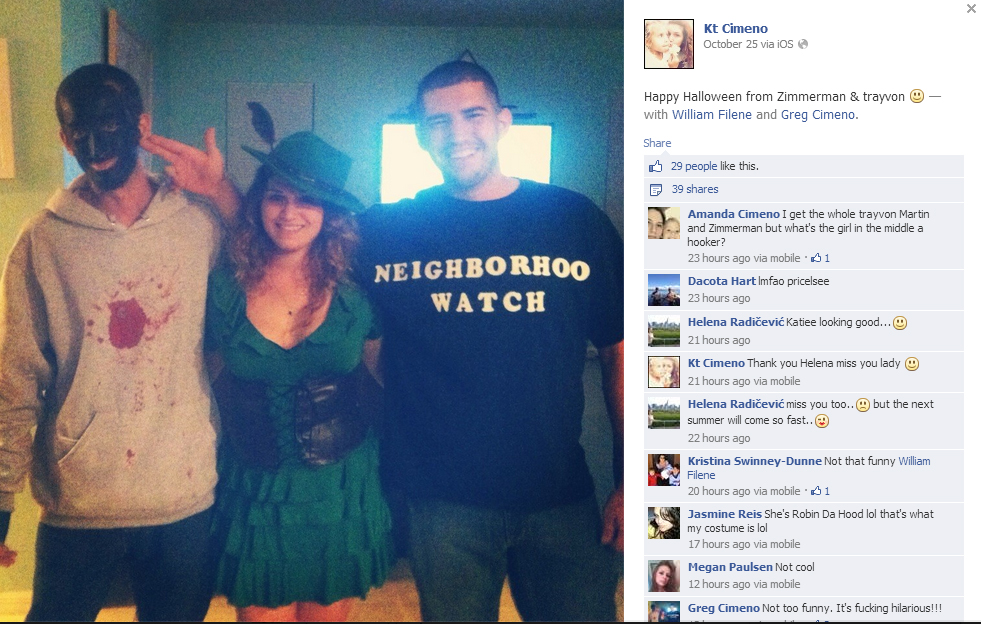
2. After viewing Neshoba: The Price of Freedom, turn the attention of young people in your life to contemporary Halloween costumes featuring American youths demonstrating their understanding of American history:

cimeno

These Florida twenty-somethings actually staged the murder of a 17-year-old boy as comedy and not tragedy and were shameless enough to publicize their efforts. For more racist costumes, check out the Ebony magazine slideshow of 2013 (not 1913) lowlights.

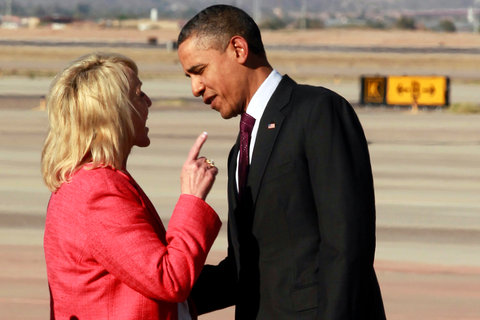
obama-brewer-blog480

3. This ugly photograph of Arizona Governor Jan Brewer wagging her finger at President Obama and appearing to scold him like he’s a child prompted my thinking about other shameless, racist representations of the President and undignified interactions with his leadership.

There’s so much work to be done before “we shall overcome” becomes a fait accompli. If you engage with young people, encourage them to pay attention to their grandparents, what they have to say about racism might literally be lifesaving.