Models Monday: Doing Something Hard

Only Halle, who had watched her movements closely for the last four years, knew that to get in and out of bed she had to lift her thigh with both hands, which was why he spoke to Mr. Garner about buying her out of there so she could sit down for a change. Sweet boy. The one person who did something hard for her: gave her his work, his life and now his children, whose voices she could just make out as she stood in the garden wondering what was the dark and coming thing behind the scent of disapproval.

I thought about the quote above, taken from Beloved, as I read Harry Belafonte’s critique of Beyonce and Jay-Z for failing to accept social responsibility. Those two, at least as conveyed through Beyonce’s camp, had no idea what Belafonte meant by his critique. The fact that Beyonce has performed at charity benefits and given money to worthy causes does not speak to the substance of Belafonte’s criticism. He didn’t say that she and her husband wouldn’t do what came easy to them, Belafonte was suggesting that they have not done what  might be hard–like allow their images to suffer. Bruce Springsteen, the celebrity Belafonte endorsed, has shown a willingness to critically examine his cultural terrain, as “American Skin (41 shots)” certainly did. This song was inspired by the tragic police shooting of unarmed, Guinean immigrant Amadou Diallo by police officers in 1999. Though Springsteen insists that the song is anti-tragedy and not anti-police, this did not prevent the Police Benevolent Association from discouraging its members from supporting Springsteen’s concerts with their labor as he performed the song in venues across the United States. Springsteen has since dedicated the song to Trayvon Martin. I may be wrong, but I haven’t known Beyonce or Jay-Z to have taken such chances.

In a previous post, I wrote about the limitations of the nearly hour long performance of “Niggas in Paris.” While Jay-Z and Kanye commanded the stage with their hit song while actually performing in Paris, they never sought to make a relevant connection to the lives of those who are actually experiencing being treated like “niggas” in Paris. The women in the video below being dragged, pregnant and with their babies on their backs, know a little something about dehumanization and yet no connection gets made

between them and what it means to be a “nigga in Paris.” Why not? I suspect it’s because being socially responsible in this way would have cost too much. It would have meant that people might have been uncomfortable; that they may not have purchased more concert tickets; sponsors may not have offered more endorsement contracts.

I read an article in The New York Times about the huge return that Jay-Z nets on a relatively small investment in the Nets franchise. I found it incredibly troubling that Jay used his influence–or at least he allowed his image to be used  to promote the idea that a new basketball arena would create jobs. Of course it will create low-skill, low-wage jobs but it won’t lead to the creation of work that will generate a middle-class lifestyle; minimum wage does not do that. Perhaps Jay-Z understands this about the kind of work that the arena will produce but he didn’t make his understanding clear to those who trust and believe in him. Doing so would have certainly influenced whether or not he was considered an appropriate choice to be a stakeholder with the franchise. As the Times article notes, Jay-Z benefits financially from his relationship with the Nets but Belafonte’s point asks us to consider whether Jay’s personal gain satisfies the terms of social responsibility.

When Baby Suggs in Morrison’s Beloved considers the sacrifices that have been made for her, she finds few people who have made difficult choices in her honor; in fact, only one person “did something hard for her.” Not only has this measure helped me to be clear about who has shown me love and who I’ve shown it to in my personal life, it has also helped me to evaluate social responsibility. When Harry Belafonte made his critique of Beyonce and Jay-Z’s philanthropy, he had Baby Suggs’s metric in mind.

“Mom and Dad’s Record Collection”

I heard Rashida Jones on NPR last week as a guest offering her reflections for their series “Mom and Dad’s Record Collection.” You might imagine her to have an interesting memory to share given that she’s the daughter of famed music producer Quincy Jones and actress Peggy Lipton. Instead of offering a predictable story about her father, Jones chose to discuss “Hey Nineteen” by Steely Dan, a record that her mother used to play.

After listening to Jones, I went to NPR’s site and listened to other interviews where people recalled one song that had a strong familial association. I enjoyed hearing Lin-Manuel Miranda, Ravi Coltrane, and Audra McDonald amongst others discussing their choices and thinking about the music I heard growing up as well as the acoustic memories I am creating in my own home. The music I heard from Ambrosia, the Eagles, Player, Carly Simon, Steely Dan, Boz Scaggs, and James Taylor was not always the music associated with the inner-city that I grew-up in, but it certainly points to its diversity.

When I was a child, I listened to jazz, R&B, pop, funk, light rock, and hip hop. My three-year old son hears mostly the same. Michael Jackson is the one artist he requests. I tried introducing him to Michael Jackson videos on the iPad one day and had much success until I played “Remember the Time.” I thought he would like the dancing in the video but he protested as soon as the music started, “That’s not Michael Jackson,” he declaimed,  “that’s a girl!” “That is Michael Jackson,” I assured him. We went back and forth like this until my husband intervened. “I can see the boy’s confusion,” he usefully whispered to me. “Look at him,” he said. “He looks very different in that video than in the other ones you showed Miles.” My husband was right. I was completely oblivious to my son’s a-historic perception of Michael Jackson from the Thriller years as I had presented them on the iPad and as he had encountered him as an avatar from the Michael Jackson Experience on the PS3. Had I jumped around sonically, it would have been fine. Michael Jackson’s voice didn’t change much between Thriller and Dangerous but his look did. I lived through that history, and this was the first time I ever thought about Michael Jackson’s transformation from the perspective of someone new to his story. Michael Jackson is a complicated figure. I no longer play his videos for Miles; we just listen to the music. Talking meaningfully with a three-year-old about race and gender identity over Michael Jackson’s changing appearance defies my abilities, but the chance encounter is certainly the strongest memory that I have of creating a musical memory in my own home.

Back-to-School: An Urgency to Know

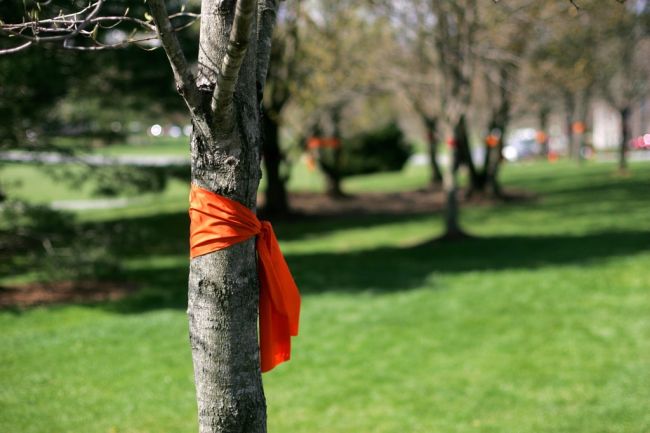
Commemorating the lives lost at Virginia Tech.

In the aftermath of Seung-Hui Cho’s shooting spree that claimed the lives of  32 people and physically injured at least 17 others at Virginia Tech on April 16, 2007, The Chronicle of Higher Education published an interesting series of reflections on the matter. They asked scholars, artists, and college presidents to imagine the commencement address they would give to Virginia Tech’s graduating class. The central message offered through these imagined addresses recasts the value of education and the aims of critical inquiry. Ariel Dorfman, novelist and professor of Latin American studies at Duke, used his address to point to the ways that the liberal arts curriculum readies the mind for an engagement with life’s mysteries and difficulties. Reflecting on some of the core divisions, Dorfman ratifies their importance for preparing students as they face some of life’s greatest challenges. He writes:

What have you been doing at this institution but precisely engaging in the very issues that now threaten to infect and sully your existence? You have studied how the science that brings us so many wonders is nevertheless unable to give us final responses to a number of fundamental questions. You have been challenged by philosophy, by psychology, by history to examine what is different, what is not easily explained, what is doubtful. You have been shaken by knowledge, broken out of the conventions you believed in, made uncomfortable with lies, forced to look into the mirror of yourselves. You have been shaken by beauty, interrogated by atrocity, exploded by languages from faraway places where death comes more easily to the inhabitants and just as unpredictably. If all through these university years you have not learned to ask the right questions about grief and community, if all this time you have not been made wary of the false answers, then I would advise you not to graduate, I would beg you to go back to the classroom and get yourselves an education.

As violent as this world is, it seems nearly impossible to imagine that students would be unprepared to engage the issues of “grief and community” that Dorfman indicates, and yet, I would argue, it happens. Investigating life’s most pressing concerns does not appear to be at the forefront of student inquiry. Being a good student as Dorfman appears to cast it shows a very personal stake in an age old effort to reconcile how we ought to live together in light of our differences.

Dorfman recommends using schooling as a model for shaping future approaches to living meaningfully:

Spend time with the literature, the books, the learning, which could not save your tormentor, lost as he was in his ferocious loneliness. Use the wonders of your own intelligence and the rivers of your empathy to become, each of you, the sort of human who ride into the world determined to create conditions where fewer of your fellows have to face the daily possibility of premature death descending upon them.

These essential tasks underscore the urgency of reading and reflecting. As Bobby Fong, President of Butler University, claimed, students gained these skills not merely “to make a living, but to make a life.” Making a life occurs for Donna E. Shalala, President of the University of Miami, through engagement with literature, science, philosophy, and art to make life intelligible. As she notes, “a world that makes no sense cannot be filled with purpose, with achievement, with growth, with joy.” Study reconciles incoherence and incongruity. If anything productive can be said to have come from the massacre it was that that terrible atrocity put the value of learning into context:

One of the important things this tragedy can help us see is that learning represents a belief in ourselves and in our innate capacity to overcome the inexplicable. Learning is the opposite of walking away, shaking our heads, and throwing up our hands. Rather, learning is an act of conviction about our ultimate ability to understand tragedy and thereby someday diminish or prevent it.

This small sample of reflections offered in the aftermath of the Virginia Tech tragedy points to the significance of going to school and earning an education. What kind of learners might we be if we kept the urgency of this context at the forefront of our minds as we begin this school year anew?

Models Monday: Beauty and Everyday Life

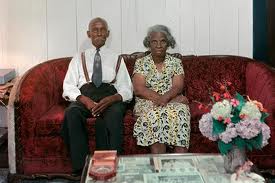
Mr. and Mrs. Albert Thornton of Mobile, AL., 1956. Gordon Parks.

Earlier this summer, I read Maurice Berger’s article in The New York Times about the discovery of a series of Gordon Parks photographs believed to have been lost. The photographs chronicled the daily life of an extended family in Mobile, Alabama in 1956. According to Berger, the found photographs expand upon themes established in that same series of 20 photographs published in Life magazine. Contrary to the documentary photographs from the civil rights period showing brutal inhumanity in black and white, Parks’s photographs reveal the dignity and humanity that black people procured for themselves as they made their lives as rich as they could, amidst demeaning circumstances, in full color and thus vibrancy. Berger contends that the full scope of Parks’s work captures the spirit and will of people committed to living fully in the face of grueling oppression.

The photograph above shows one of Parks’s photographs and confirms Berger’s contention; too, it reminds me of Zora Neale Hurston’s observations about black life–interestingly as she observed it in Mobile. Thus, in “Characteristics of Negro Expression,” she offers the following:

On the walls of the homes of the average Negro one always finds a glut of gaudy calendars, wall pockets and advertising lithographs. The sophisticated white man or Negro would tolerate none of these, even if they bore a likeness to the Mona Lisa. No commercial art for decoration. Neither the calendar nor the advertisement spoils the picture for this lowly man. He sees the beauty in spirit of the declaration of the Portland Cement Works or the butcher’s announcement. I saw in Mobile a room in which there was an over-stuffed mohair living-room suite, an imitation mahogany bed and chifferobe, a console victrola. The walls were gaily papered with Sunday supplements of the Mobile Register. There were seven calendars and three wall pockets. One of them was decorated with a lace doily. The mantel-shelf was covered with a scarf of deep home-made lace, looped up with a huge bow of pink crepe paper. Over the door was a huge lithograph showing the Treaty of Versailles being signed with a Waterman fountain pen.

It was grotesque, yes. But it indicated a desire for beauty.

The Thornton home looks nothing like the Mobile homes Hurston describes as “average Negro” abodes. These sitters strive towards respectability. Hurston’s observations put me in mind of the Parks photograph largely because they situate diversity in black life while at the same time acknowledging a common “desire for beauty.” I saw this desire not only in the bouquet of flowers placed on the coffee table and formal wear of Mr. and Mrs. Thornton but also in the neatness and order that so marked their uncluttered space.

I’ve been learning to take greater pride in my own efforts to maintain a well-ordered environment. Rather than as a chore to be done, I now think about how in sweeping the floor, vacuuming the carpet, washing the dishes, and cleaning the commode I am not merely doing what needs to be done but I am making a claim about the value of my space. I better understand now that in maintaining my environment, I am making an assertion regarding its value. Under Jim Crow segregation, Mr. and Mrs. Thornton were not supposed to think that they led lives of value. The photograph of them shows that they had another idea about that–they disagreed with their culture about the measure of their lives. For those of us who live anonymously in small homes without great material fortune, we have a similar fight to declare the meaningfulness of our lives.

I am keenly aware of how little regard I am supposed to have for myself as a result of the trappings of success that I lack. It would seem impossible not to know this. Popular voices in American culture assume a common starting point for measuring success and so much of what you read or view in the culture trumpets money and the loot it affords as the standard for judging human value. If you are at all critical, however, the absurdity of this standard through the lens of popular culture undermines itself. For example, I was reading an article on a celebrity news site about boxer Floyd Mayweather Jr.’s release from prison. Apparently, the night before his release, his current girlfriend had a birthday and Mayweather paid for the cake to look like an expensive bag, he bought her expensive jewelry, and perhaps he paid for everyone’s meal. I have to admit, I was confused about the gifts and can’t be sure if he also bought his girlfriend the purse that the cake was based on or if the cake itself was expensive and that’s what was supposed to be the fact to acknowledge; all I know for sure is that he spent a lot of money. The author of the piece did make clear that readers were supposed to be jealous because we weren’t similarly feted; but of course, this was completely absurd–at least to me. Floyd Mayweather was in prison for having attacked his ex-girlfriend while his children watched. Expensive goods do not replace this fact. His purchasing power does not eclipse the fact that his ex-girlfriend was not a worthy contender for the boxer leading authorities rank as the best pound for pound in the world. To me, the ex-girlfriend is lucky to have escaped with her life. Given that precedent, I do not envy his current girlfriend anything.

Maybe Floyd Mayweather, his current girlfriend, and the author of the article all have a “desire for beauty;” maybe we all do. The critical point is that we are living at a time when acquiring beauty is thought to be available only to those with money. The Mayweather example highlights the difference between acquiring beauty and spending a lot of money. The goods that Mayweather purchased for his current girlfriend, whatever they were, were certainly expensive but they actually may cost too much to be beautiful if they were given by an unchanged man. I can afford everything in my life and that’s what lends those things value. And when I am broke, without a dime to spend, I can always straighten, clean, wash, cook, or iron something that will then provide me with the beauty I desire. The Thorntons showcase the availability of beauty in the most oppressed circumstances to those invested enough to invent it.

Back-To-School Series

Summer has ended for children in the U.S. South. The school bells chimed nearly a week ago and have called them back inside; so with another season comes another series. Thus, I have planned a series of posts marking the occasion. I look forward to sharing my Back-to-School Series featuring an interview with a high school math teacher about his expectations for his in-coming students and the reality that greets him the first week; my email exchange with a friend about her end of summer trip with her son; my reflections on the Virginia Tech shooting that occurred on April 16, 2007 in light of the recent violence in Colorado and Texas; my thoughts about school supply lists and a few suggested readings. I hope that you will check back for these posts. EMM

Models Monday: An End to the Games

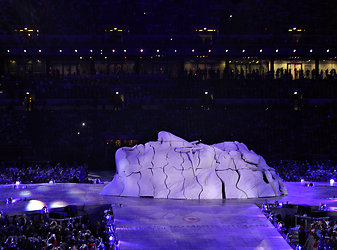
Face of John Lennon as “Imagine” is performed at the Closing Ceremony of the 2012 London Games. My father quoted lines from this song the night before he passed away: “You may say I’m a dreamer/but I’m not the only one.” For that reason, this image holds a lot of meaning for me. Jed Jacobsohn/The New York Times

I have truly enjoyed the 2012 London Olympic Games (despite NBC’s best efforts to drain whatever enthusiasm I could sustain with their tape delays and sentimental, predictable narratives ostensibly of human interest but completely annoying to sports enthusiasts eager to actually see the competition whose results we had already glimpsed–but I digress). The athletes, particularly the women, were truly exceptional. I have enjoyed watching some of my favorite athletes, who aren’t necessarily famous outside of sporting circles, finally win gold medals; I am always a sucker for those who can win one for the home team so I cried like a baby when Jessica Ennis won gold in the heptathlon; I was touched when Saudi Arabia’s Sarah Attar, with her covered-up self, received a standing ovation for coming in dead last in her heat but being the first woman from her country to ever compete at the Games–another tear jerking moment; I was thrilled beyond measure when the U.S. Women’s 4×100 smashed the World Record for that event and was proud as could be when the 4×400 brought home the gold as well.

It was refreshing to be able to watch athletes who were not famous compete at the top of their game. I loved the unpolished way that they rambled off heartfelt, unimpressive yet genuine responses to basic questions about their performances. I was so happy for them and the freshness of what had occurred that it didn’t matter what they said because their inarticulateness bespoke a truth about originality and novelty: sometimes it just leaves you speechless.

Honesty, the truth of why athletes show-up, stands out as one of the many things that I enjoy about sports. Being coy or brimming with personality cannot replace the singular reason that athletes step-up to the line: they want to win; it’s an ever-present, abiding admission of a clear and undeniable desire–a spectacular truth. This was a Games that worked because this simple truth didn’t appear to be outshone by the glare of celebrity. Perhaps this was the case because of the sheer number of non-celebrity athletes competing and their volume dulled celebrity by comparison–or maybe patriotism does that…or maybe actual royalty does that…I’m not sure what it was but I can honestly say I was not annoyed by the narrative of celebrity that over-saturates this culture and bores me to no end. The London Games re-cast those terms and turned the USA basketball team into a group of men who wanted to win gold. To my surprise, I was as excited for the USA Men’s basketball team as I was for the Women’s squad.

I’m actually sad to have seen the Games come to an end. It’s been a great two weeks where the meaningfulness of hard work, discipline, focus, and even dreaming with intention really seemed to matter.

Worthwhile Viewing: The Barber of Birmingham

Mr. James Armstrong sitting in his barber’s chair.

The 2012 Academy Award nominated film for documentary short, The Barber of Birmingham, can be viewed on-line at PBS until September 9, 2012. I watched it today. I first learned of the film when I heard Michel Martin interviewing co-director Robyn Fryday on “Tell Me More” last week. The POV website for the film offers a host of useful links. This film would be worthy to consider using for a screening party for a community group or for using with students in light of the upcoming Presidential election.

See Also: 

Jacob Philadelphia, President Obama, and the Barber

Leaning in to History

I Can Relax Now Because (Olympics 200m Dash Spoiler)…

Allyson Felix wins the 200m dash at the Olympics. Jed Jacobsohn/The New York Times

Allyson Felix won gold in London! I’m so happy for her…and the United States now leads the overall medal count. What a way to end the day: U-S-A!

Models Monday: Fear and Dread

Sonya Richards-Ross of the United States wins gold at the London Games. Chang W. Lee, The New York Times

Just in my casual reading this weekend, I came across two articles dealing with the subject of anxiety, Madeline Levine’s “Raising Successful Children” and Shaun Groves’s “Parenting A Child with Anxiety.” They were both attractive articles to me because I have spent a good bit of my life worrying. In fact, when I was a child, my mother decided that it was best not to even bother punishing me because I spent so much time punishing myself with worry and fear that she thought her time would be better spent helping me to calm down. While I’ve gotten much better, my Mom still thinks that I’m too hard on myself.

What I’ve gotten better at is not surrendering so much time to fear and dread. I used to stew in worry. I was someone who was always aware of being afraid and worrying and I would talk about my fears or play them out in my head. Paying attention to my fears enabled me to articulate them to myself. Interestingly, once I knew the root of my concerns, I could actually move on, but I would only move on to new fears and concerns. The insights, however, always mattered and one of the chief ones has been that worrying can take up a lot of time. Time has always been precious to me. I think of time like many Americans think about money–I practically worship it. Time has to be the one thing that I have always wanted most to control and to preserve. When I realized how much time was better spent on concentrating my intellectual energy on other things, I kicked myself out of the fixed grooves of anxiety.

Playing sports was the one thing that brought the most consistent dread into my life. To this day, my one recurring nightmare involves me dreading the starting line of the 400 meter dash. In the dream, I never actually stand at the starting line, instead I am usually walking around trying to think of a reason that might convince my coach to withdraw me from the race. The pain of running the quarter is so great that I used to wonder if being capable of running it was a curse and not a talent. The fire that blazes in your lungs and the heat that settles into every possible muscle in your body and weighs it down, crushing it, pains me to even think about! I have such tremendous respect for Sonya Richards-Ross. I have always pulled for her and I was more than delighted to see that she won the gold medal in the 400 at the London Games. Her poise masks the strenuousness of her event.

I can’t help but recall how much emotional and physical pain running brought me whenever I watch track and field. Overall, I derived very little pleasure from being a competitive athlete. I never liked competition–EVER. Even as an observer, I only really enjoy it when I don’t have a serious investment in the athlete or the team. If I’m invested, then it’s best for me to watch the contests pretty much like I’m watching the Olympics, which is to say by knowing the outcome in advance; reading about it. I like a sure thing. Michael Jordan was a sure bet. Michael Jordan made me believe that you could count on something in sports and that’s why he ranks as my choice for the greatest competitor of them all.

Aside from ending my athletic career, the other thing that has helped me to manage anxiety is surrounding myself with people who are very good at playing the cards they are dealt. My mother is the Michael Jordan of playing her hand. When I shared my concerns with my mother about handling my father’s impending death, I remember at one point saying that I just didn’t want to deal with the emotional toil and the logistical matters that come with attending to death, and my mother’s response was to say, “well, you’re going to have to.” And she was right. I did have to. It was clear from what she said to me that there was nothing to brood over. While I think it’s important to have people in your life who will listen to you cry, you also need people who will help you move past those tears because to my mother’s point, living requires that attention be given to the inevitable despite what you might want.

Recognizing life’s demands and some of its inevitabilities, I have learned to be much more discriminating regarding how I make choices. I realize now that so many of my earlier choices were based on my failing to fully examine the reasons for my involvement. Thus, I became a competitive athlete because I was good at it and so of course you should do something if you’re good at it. I’ve joined clubs because everyone says that membership would look good on your resume. I’ve gone to parties because it’s something that people of a certain age just do. I have since stopped making choices that involve the conclusions other people have reached for themselves. Now, I think about how I want to spend my time and decide whether or not making a particular choice will prompt anxiety or contribute to inner-peace. Knowing how to think for myself has brought me comfort and has added serenity to my life. Surrendering your life to someone else’s conclusions may just lead to anxiety, fear, and dread but knowing how to derive your own conclusions and craft your own terms for living can relieve you of that weight.

As the summer vacation nears its end for many American children, this charge to think for one’s self seems particularly relevant. School becomes important in this context not only because it helps to prepare young people for the world of work, which is what gets stressed, but because it helps them learn to use their brains. Forget the subject matter, learning to think over content matters for the quality of one’s life. If nothing else, learning how to think and disciplining one’s mind suits one for resiliency, which is something that the inevitabilities of life requires.

Intergenerational Elegance

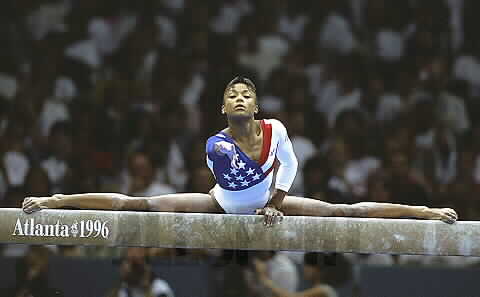
Dominique Dawes, Atlanta 1996 Olympics

American gymnast and Olympic gold medalist Dominique Dawes has offered poignant commentary on Gabby Douglas’s performance at the 2012 Olympic Games. Dawes’s pride and clear support for her younger colleague is refreshing in light of the pointless (social) media contests between athletes from different eras who cannot test their (e-)theories through today’s games. While I agree with Kobe Bryant’s claim that the 1992 Dream Team was a better team than the 2012 group and that this year’s group could beat them (certainly the 2012 could have won a game or two), the debate quickly goes stale; of course you wouldn’t think so if you read the Sports pages. They seemed to find every player from the 1992 team and every player who practiced against them for a statement. Journalists and former athletes discussed Kobe’s views for days–that is until Hope Solo gave them a reason to write about another intergenerational battle between impossible contestants. Thus, between the pitch and the broadcasting booth Brandi Chastain’s commentary on the U.S. Soccer team’s play prompted Hope Solo to tweet her displeasure at her predecessor’s views. Following these sporting unpleasantries, the graciousness Dawes has shown in welcoming Douglas into the unfolding story of Olympic glory provides a wonderful example of the possibility of communion among even competitive spirits.

Gabby Douglas, London 2012 Olympics.

I read interviews with Dawes before Douglas won gold in the individual all-around and her remarks were heartening indeed. She clearly supported Douglas and wanted her to excel. After Douglas won individual gold, Dawes’s response couldn’t have been more touching if Hallmark scripted it. Go to her website and check it out for yourself: http://www.dominiquedawes.com.

Not only do women get a bad rap for not being able to get along, but women athletes can become a figure for dramatizing this stereotype. Unfortunately, Hope Solo’s undisciplined tweets only reinforce an already limited notion of women’s interactions. What I have always liked about the Williams sisters contests is that their rivalry has always shown that women’s relationships with one another hold promise for reconceptualizing how we consider the pursuit of goods in limited supply. Unlike formative tales of men and brothers like Cain and Able or Romulus and Remus who plot their brother’s demise, Venus and Serena Williams enable a new vision for imagining our foe’s end. Venus lost in individual play so we will not have the opportunity to watch she and Serena battle it out as opponents in London for a gold medal. As teammates, they will compete together for a medal in doubles play. Their example, however, brings into focus the interaction between Dawes and Douglas. So far, they have shown that the possibility for elegance and grace exists where strife typically reigns; they have shown how beautiful it is when support is given rather than begrudged. Gabby Douglas still has two more chances to win gold, and while we don’t know what the outcome of those challenges will be, we do know that Dominique Dawes will be in her corner cheering her on and thus offering us another model by which to live.