Recovering Trayvon Martin

Though race gets made in the culture and not in nature, like processed food, the manufactured product has many powerful and potent uses. Though not a natural product born from the earth, Twinkies, Doritos, and Corn Pops can effect real damage on the body as well as on the earth. Over-consumption can clog the body’s arteries and lead to the damage of vital organs. The energy that goes into manufacturing these products create additional pollutants that are reeking real damage in the environment. The fact that race is not natural but created does not diminish its power; its potency.
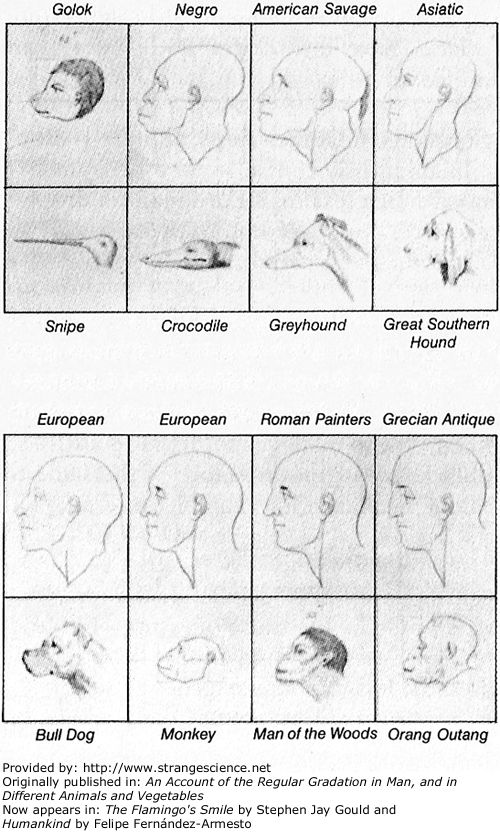
Scientist/Artist: Charles White, An Account of the Regular Gradation in Man, and in Different Animals and Vegetables (1799). This representation of The Great Chain of Being shows the “Negro” as nearer to the ape than the ideal.

The Englightenment Age investment in studying the body as the primary source for an engagement with the science of race and its grounding–though totally misguided as a rational, disciplined, responsible practice–continues to inform how we engage the subject of being raced or having race. When we want to point to race or to indicate its meaning, we often do that through an engagement with the body. So if we had moved beyond examinations of race that equated it with the natural sciences, we could, even in our casual conversations, discuss the way that language makes and constructs race, for example. We would talk about the way that language brings race into being through its system of signs. But no, we make race about how bodies look and what we think is in them. Such a view of race has been boldly present in the Trayvon Martin case.

That child has been made into a character of black malevolence in the on-going racial plot line of American history through depictions of his body and the internal networks that make it go. The most recent narrative regarding the autopsy report makes this plain. George Zimmerman’s system showed the presence of manufactured drugs in his system, Temazepam, a drug also known as Restoril, which is used to treat insomnia. The headline dominating the news, however, is not the story of the drugs in the body of the living man but the ones inside of the body of the dead child. Despite the fact that the U.S. National Library of Medicine makes the suggestion that Temazepam users should “tell your doctor right away if you experience any of the following symptoms: aggressiveness, strange or unusually outgoing behavior, hallucinations (seeing things or hearing voices that do not exist), feeling as if you are outside of your body, memory problems, difficulty concentrating, new or worsening depression, thinking about killing yourself, confusion, and any other changes in your usual thoughts, mood, or behavior,” Zimmerman’s use of this drug isn’t being discussed in the mainstream in terms of his credibility. Instead, the trace amounts of THC, the drug found in marijuana, in Martin’s body have been used to reify the very notion that he is not entitled to our sympathy because he is outside of the terms of civil, manageable, and properly sociable practices and habits.

The marijuana that Trayvon Martin smoked apparently confirms his status as a “thug.” The egregiousness of this charge becomes most apparent when you accept how racialized it is. “Thug” functions as a racialized term for talking about black boys and men that performs in the way that poet Cornelius Eady describes it in his poem “How I Got Born,”

“When called, I come.”

There are no public service announcements about how we can save our sons from the traps of being a thug; there are no Lifetime movies about black boys who are vulnerable to peer pressure and choose the posture of a thug to attract girls. Michael Eric Dyson tells just this story of Tupac Shakur in his wonderful bio-critical work, Holla if You Hear Me: Searching for Tupac Shakur, about the slain rapper. Tupac was a thespian whose penchant for the arts didn’t help his ambitions to be liked and popular with girls. Tupac’s story of adolescent angst doesn’t resound on American television and in mainstream articles like the stories about troubled kids who go on school shooting rampages or who binge drink or who bully. Those things become causes for national attention. The pressures that might have been placed on a black male honors program student who baby sat, volunteered, and baked cookies has no thematic resonance with stories of white adolescents who are coming of age.

Trayvon Martin was no thug. He was a young man coming of age who found representations of being a thug attractive…and why wouldn’t he? Reflections of the glamour of thug life abound in American culture. Justin Timberlake finds thug life attractive. If he didn’t, why would he make records with Lil’ Wayne and T.I., two rappers who perpetuate this image and have both faced jail time? Will Smith rhymes, why not rap with him? Robin Thicke doesn’t mind being associated with the image of thuggin’ either. He also raps with Lil’ Wayne. And while Beyonce has been shrouded in representations of upper-class motherhood of late, the lyrics to “Soldier” by her group Destiny’s Child celebrates thug glamour:

We like them dem boys who be in them ‘lac’s leanin’//Open their mouth their grill gleamin’//Candy paint keep that wheel clean and//They keep that beat that be in the back beatin’//Eyes be so low from their chiefin//I love how he keep my body screamin’//A rude boy that’s good to me with street credibility//If his status ain’t hood//I ain’t checkin’ for him//Better be street if he lookin’ at me

The photographs of Trayvon Martin that came into circulation once there was speculation about his character reflects the image that Destiny’s Child heralds. Just like the photograph of Martin trying to look like he was a tough, hard, football player, the photographs of him with a grill as well as the one with the subdued eyes show an effort to be the “rude boy” with “street credibility” that young people find attractive.

Trayvon Martin was not a thug. He exemplifies some of what I learned from thinking about the lives of two of my cousins over the years. One cousin, who I’ll call Dame, was the product of a marriage that disintegrated and he lived in an inner-city project with his mother. His situation with her was never stable as she was drug dependent. The other cousin, who I’ll call Curtis, lived in the suburbs with his two parents who worked very solid jobs. My aunt was a very present mother who would take furlough time as much as she could so that she could be at home for her family or make home for them. Despite my aunt and uncle’s presence and their ability to provide for and nurture my cousin, he wanted very much to have the life of our cousin who lived in the Projects. I remember Dame talking about how much Curtis wanted to “get down” selling dope, stealing, fighting. Dame said that Curtis wanted him to teach him that life but that he just couldn’t do it. As Dame explained it, his life had to be as it was. He didn’t understand why Curtis wanted to do what he didn’t have to in order to make it.

Curtis’s view of Dame made sense to me. When we were younger, I remember thinking that Dame seemed capable. Before I realized how sad it was, I used to think that his ability to provide for himself, to secure clothes, food, and shelter, seemed mature. Even though Dame stopped going to school after his 8th grade year, I used to feel stupid about making my way in the world compared to what he could do. I mean, I wouldn’t have known how to catch the city bus from my house to downtown, but I imagined that Dame would always know how to navigate through the world. I got lost one time in the city. My aunt had taken me to a friend’s house with her and asked me to go to the store and purchase some things for her. When I left the store, I had no idea how to get back home. As I tried desperately to find my way, I vividly remember crying and thinking how this never would have happened to Dame. He would have known how to get back home.

The level of maturity that inner-city kids like Dame have to assume at a young age is heroic when it’s represented through the lives of white kids. Thus, Ree, the character that Jennifer Lawrence plays in Winter’s Bone impresses us because of the responsibility that she takes for her life as well as the young lives of her siblings, but as a culture, we seem to be impassive when young black kids do the same thing. It made sense to me that Curtis would want to be like Dame. Dame was forced to be a man when he was five. You have to mature for that to break your heart. It makes sense to me that young Trayvon would have wanted to wear the mantle of a thug. It is a posture of defiance, independence, control, and power. It makes sense that a young boy coming of age would have wanted to embrace the markers of the authority that he did not feel. He was a very smart young man so it just breaks your heart that he didn’t get a chance to live long enough to contemplate his vulnerability.

See Also:

For more posts on Trayvon Martin, see the A Heap See Page.
Summer Reading

During the summer I add food writing and adventure tales to my usual reading list. I don’t quite know why I incorporate these categories at this moment but it has consistently worked out that way for at least the past several years. I haven’t compiled this year’s list yet, but I suppose because of my dreaming of eating in Cleveland, I thought about my previous years’ reading where hometown food writer Michael Ruhlman consistently ruled.

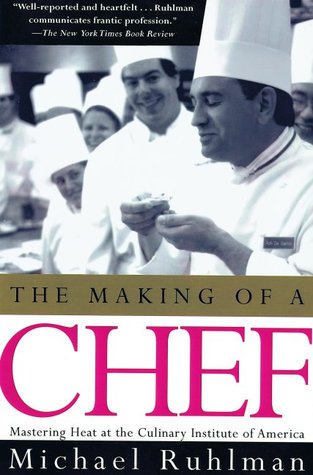
As I think about Ruhlman’s book, The Making of a Chef, I guess I do get a sense of why I read food writing during the summer. In The Making of a Chef Ruhlman writes about the experiences of students, himself included, at the Culinary Institute of America (CIA), the Harvard of cooking schools. Not only are the stories of how people found themselves at the school interesting, but the impact of the education on the book’s author helped to crystalize the value of learning and showed proof of what it can do. The presentation of food can reflect heightened understanding. In one memorable scene from the book, Ruhlman describes his desire for a morning cup of coffee and finds that his coffeemaker isn’t working; he’s without the use of his stove because of some home remodeling taking place; and if I can recall it properly, he can’t go out to buy coffee because there’s been heavy snowfall. So how can he have his coffee? After having only been at the CIA for a few months, the impact of the program shows in his decision to use his charcoal grill to prepare his coffee. His education had awakened him to novel possibilities.

Ruhlman’s grilled coffee offers an edifying example because it suggests that we can indeed be fulfilled–satisfied because oftentimes, we do have precisely what we need. If you are living in the United States, then you are residing in a culture that ceaselessly tries to convince us of the inadequacies of what we possess. It’s an unexpected and odd equation whereby ownership equates to shabbiness. Ruhlman’s turning to his grill was a meaningful act because it suggests the value of our everyday things and their purposefulness despite their diminished gleam. Such an act of reclamation identifies what I mean by a good education. A good education is one that helps you to discipline your thinking so that you enter into the habit of contemplating your life beyond apparent constraints. Ruhlman’s coffee suggests that such an approach brings savoriness into your life.

I have only recently realized that my interest in cookbooks has a great deal to do with wanting to immerse myself in just such a notion of savoriness. As I flipped through Dori Greenspan’s Baking: From My Home to Yours the other day, I noticed that my thinking wasn’t really concentrated on making the wonderfully delectable treats pictured and plotted but on how they would fit into my life for eating them. So for example, I was thinking that I would enjoy the Orange Tart. I didn’t picture myself actually making it as much as I saw myself having it finished and wondering how I would store it. Then I moved from that thought to how wonderful it would be with a cup of warm tea, but then I realized that I would most likely be the only person eating it. My husband’s not really an Orange Tart and tea kinda guy. Miles would eat it…it just wouldn’t BE the picture. The picture suggests that the Orange Tart is just good. Period. Want it. Make it. Eat it. So then I thought about how television cooking shows really do a successful job of putting recipe ideas into a life plan. They don’t just offer the recipe, show you how to cook it, and then sample it. They tell you how the food might fit into a concept of some sort; a dinner party, reception, gallery opening–that kind of thing. What I realized was that I have been disappointed sometimes with food that I have prepared, not because it didn’t taste good, but because it didn’t fit within a larger plan for how it should be consumed and how it would be enjoyed. When I am thoughtful about the food, all goes well; nothing gets wasted. And that’s really what I want my life to be focused on: Relevance. When nothing gets wasted, that means that everything had a purpose and that purpose was served. Thus, all was relevant–and for me, this reflects the weightiness, the tied to the earth goodness that makes life savory.

Perhaps another reason that I like food writing and why I read it during the summer is because the summer marks a period of restoration for me and efforts to feed the body are always about replenishment and recovery. I am interested in how people seek to replenish themselves. To that end, Peter Menzel and Faith D’Aluisio’s Hungry Planet: What the World Eats is a sumptuous delight. The book features families from around the world photographed with one week’s worth of their groceries. A table also organizes the food so that the photograph gets chronicled through types of food and financial commitment. Thus, as one example, the book’s focus on the Melanders family of four includes a tally of one week’s worth of food in November that breaks down through categories and expenditures in this way: Grains & Other Starchy Foods: $31.98; Dairy: $64.33; Meat, Fish & Eggs: $51.31; Fruits, Vegetables & Nuts: $78.10; Condiments: $31.83; Snacks & Desserts: $14.56; Prepared Food: $66.78; Beverages: $70.17; Miscellaneous: $91.01; Food Expenditures for One Week: 379.39 euros/$500.07. The list itself is even more detailed than my representation as each category chronicles the food shown in the picture. The authors include a recipe from each family in addition to stories about how they consume and consider food.

I flip through Hungry Planet from time-to-time throughout the year. I have noticed that the Menzel aesthetic gets reflected in many of the food blogs that I read. Sometimes menu planners will show photographs of the food they purchased for the week, and other times home cooks will lay out the ingredients used in a recipe they’re sharing. Mimicry serves these bloggers well. Menzel’s aesthetic underscores the beautiful colors and textures that make up a large percentage of the time and attention we devote to feeding ourselves.

I do know that this year’s food reading list will include Michelle Obama’s book American Grown: The White House Kitchen Garden and Garden’s Across America. Though some critics held a rather cynical view of Robbin Gourley’s children’s book, First Garden: The White House Garden and How it Grew, I appreciated the work. It tells a colorful, vibrant story of family and gardening at the White House potentially informative to children and adults alike. It seems to me that this book serves as the kind of inspiration that the First Lady encourages.

Gourley’s first book, Bring Me Some Apples and I’ll Make You a Pie: A Story About Edna Lewis, would be a pleasant read as well. I flip through The Taste of Country Cooking, by Edna Lewis, pretty regularly. Lewis’s family was among three who claimed a community as freed people in Virginia. They called their

community Freetown. Reading The Taste of Country Cooking is a rich experience that elegantly demands that you consider the historical context and the meaningfulness of the labor demanded for living in light of what had to be a feeling of indescribable assurance. As strenuous as farming is and as anxiety producing as it must be to have to work in accordance with nature, performing such labor in the shadow of the horrors that existed before in slavery must have been an extraordinary feeling. When I read this particular work by Lewis, I think I do so to try to come to language over what that feeling must have been like. One of the reasons why I find the title of the “award winning” documentary about Lewis, Fried Chicken and Sweet Potato Pie (featured above), disappointing is because it renders the ineffable through lazy racial allusions. To be fair, Mrs. Lewis does have a section in The Taste of Country Cooking where she writes what she voices in the film that makes the first part of the title relevant. Mrs. Lewis doesn’t say anything about Sweet Potato Pie though, she merely gives a recipe. To the point of Gourley’s book, Mrs. Lewis’s memories about pie involves apples.

I heard Peter J. Hatch on NPR recently discussing Thomas Jefferson’s garden and this inspired me to want to read his work, “A Rich Spot of Earth: Thomas Jefferson’s Revolutionary Garden at Monticello.” I’ve never visited Monticello but it’s definitely on my list. So is Mount Vernon, George Washington’s estate. Interestingly, the description for the book about dining and hospitality at Mount Vernon, Dining with the Washington’s, doesn’t mention slavery’s role in that practice–unless you count the line that says that the book looks at “those who served” the meals to those guests. Such a line becomes difficult to accept as a reference to slavery, however, because the description claims the volume to be “charming.” Well, there’s certainly incongruity between hospitality, charm, and slavery. Nevertheless, this book is also on my wish list.

I didn’t have a chance to get to my adventures in adventure reading in this post, but as I reflect on the food reading leading to imagined excursions, my reasons for reading these titles is also coming into focus. So I’ll write about those books another time, but for now, all I’ve got to say is: Don’t sleep on Moby-Dick! I can’t wait to read that one with my son. Great, great book.

12 Hours in Cleveland

My mother knows all of the best places to eat in Cleveland. My husband thinks that when she retires, she should give culinary tours of the city. What I’ve learned from paying attention to the places my mother eats is this: If you walk in and see lots of old people, and I’m talking very, very old people using canes and walkers, and wearing thick bi-focal glasses and you suspect that they’re not just grandparents but probably great grandparents, then you have hit upon a gem! Old people need actual food and not that processed stuff. I’m talkin’ real potatoes and fresh carrots–nothing frozen, manufactured, or held over from another time. You can expect to be able to see and taste your food. There will be chunks of onions and celery in your gravy and big flakes of freshly ground black pepper. You will be able to cut your chicken with a fork…and the bread will melt in your mouth. There will also be light! Forget that stuff about mood, atmosphere, and ambiance. There won’t be any dimmed lights in the place. You will be able to see how clean your flatware is and how much salt you shake on your food. Old people. They hold the key. If they are in the house, the food will be real and it will be good.

I was reading Clotilde’s blog, Chocolate & Zucchini, and she had written a post about imagining spending 12 hours in Paris that she patterned after her friend Adam’s post a few years ago about how he would spend 12 hours in New York. I decided to try planning my own culinary trip to Cleveland, enjoying places that my mother has generously brought into my life.

So, I am going to choose a Tuesday as the day where I will enjoy the food, but I would need to spend some time on Monday getting it all together because I want to plan for a picnic at the Cleveland Metroparks Zoo. So on Monday, I would go to the the Westside Market, which is only open Monday, Wednesday, Friday, and Saturday.

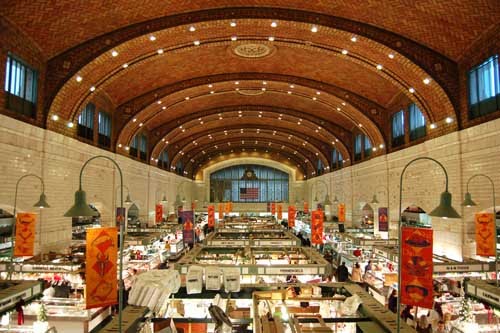
This gorgeous photograph of the West Side Market comes from the “All Things Cleveland Ohio” blog.

The West Side Market is Cleveland’s oldest publicly owned market. I used to love going there as a child. It is a feast for all five senses. I don’t have to work hard to try to convince myself that if I’m still enough, I can travel back to the sweet taste of crisp white grapes pulled with quick hands from a vine that I desperately wanted to take home. I swear I can hear myself chewing the grape and hearing the rest, the remainders on the vine, slide into a bag before it gets handed to a young man who will weigh it as we count out cash to give to the young woman who manages such things. Thinking about how I buy fruits and vegetables now at the grocery store, the most prominent thing I remember from buying from the West Side Market is actually being able to smell, see, and touch the fruit at the stands because nothing was pre-packaged in bags or in plastic containers. Brown paper lunch bags were available at each stall and you would take a bag and fill it with what you wanted. Those were the days when you could select every cherry you wanted for your bag in order to ensure the sweetness of each one. My Uncle B.B. was also a big fan of the cheeses and the deli meats. I remember bringing home grapes and melons, cheeses and fruits. Adults were excited about buying meat from the market–especially for holidays. They would buy their ribs, chicken, and steaks there. I don’t remember even knowing that you could buy pastries at the West Side market. The fruits and cheeses were my delight. So for the picnic I’m imagining at the Zoo, I will buy three pounds of grapes–one pound each of white, red, and purple seedless ones. I will also buy cheese–one pound each of pepper jack, cheddar, and colby. I will purchase one seedless watermelon, two pounds of cherries, one pound of bananas. I will also purchase about three pounds of shaved smoked turkey. I’m debating about whether or not to have sandwiches for my picnic; maybe the meat will be for another time. Of course I won’t use all of this food for my picnic, we’ll save some for home.

Next, I would go to Joe’s, a fine deli and restaurant in Rocky River. Joe’s is one of those places where you’ll see those old people I told you about above.

This is an image that I grabbed from someone’s Four Square page. I daydream about being able to go into Joe’s and take my own pictures of some of my favorite dishes. Just thinking about it makes my mouth water! Thanks to whoever took this photograph. I envy your access.

I would purchase two “Chicken Pasta Salads” and curse the fact that I couldn’t also take along my favorite salad, the “Cranberry Chicken Salad,” for the actual picnic. Follow the link to read about the glorious items in that mix. When I’m dining in, I usually order the Cranberry Chicken Salad with the House made Balsamic Vinaigrette, which is beyond heavenly. As much as I want this salad, I think the pasta salad is a sturdier option for a picnic and it uses the same dressing but I wouldn’t have to deal with the lettuce, which wilts under the warm chicken and so would not hold up until the next day’s picnic. So the “Chicken Pasta Salad” would work because I would get the dressing and the chicken and it could be served cold. In addition to these salads, I would also get about five pieces of their Baklava (walnut or pistachio makes no difference to me because I love them both) and at least one lemon bar just to enjoy on the way home. The desert menu is embedded here in case you want to imagine what you might enjoy.

I grabbed this image from Yelp. My Mom goes to Joe’s for her potato pancakes but I really like the ones served here. The place looks like an old railroad car. I don’t know what makes my Mom try some of these spots but I’m glad she’s so adventurous.

I think that I’d have to go to the Breadsmith for my French Baguettes and then I’d pick-up a few extra rolls to go with my Tuesday morning breakfast. On Tuesday morning, I’d stop by John’s Diner and get a few orders of potato pancakes with sour cream and carry them home so that I could eat while I assembled our picnic fare.

Off to the Zoo

The Cleveland Metroparks Zoo is the bomb! When my husband and I were dating, I brought him home with me once just so that we could visit the Zoo. He was so impressed with Cleveland’s Zoo that it became the measure for all of the other Zoo trips we would take during the course of our travels. I think it’s such a good Zoo because it offers a full experience of the natural world. You feel like you’re in a big park and there are lots of things to do and see in an incredibly vast space. Too, it’s very reasonably priced. Adults pay $12.25 and children over 2 pay $8.25 during the summer months. During the fall and winter months it’s $8.25 and $5.25 respectively. I’ve always thought that Cleveland did a good job imagining family experiences. City planners appear to think about how families might be able to enjoy themselves on a range of budgets. Too many outdoor arenas these days make it difficult for people to picnic, which traps you into buying overpriced things at the venues and standing in those long lines.

I used to enter the Zoo and head straight to the Rainforest. I’m incredibly afraid of snakes but I think I would tough it out for my son’s benefit so that he could get the full Cleveland Zoo experience. I’d be ready for some picnic fare around 11:30. I didn’t pack drinks because I love the fruit juice that they used to sell at the Zoo that comes in fruit shaped plastic containers. I used to struggle between the strawberry and the grapes (or maybe the choice involved the orange), but I think I liked grape the best. So we’d get our drinks and eat our grapes, melon, cheese, pasta salad, and smoked turkey sandwiches while we watched the waterfowl. We would take in more exhibits until about 3 p.m.

Heading Home

On the way home, we’d stop at United Dairy Farmers (UDF) and get strawberry milkshakes and I would get four scoops of strawberry sherbet to store for later. UDF is a taste explosion! You have not had good sherbet until you’ve had it. When I worked at the Cain Park ticket office for a summer job, there was a UDF across from the park that seduced us all into tendering over our summer pay. I will never forget the night when one of my co-worker’s parents came by to visit us while we worked our late evening shift and brought us each scoops of my favorite sherbet! If you are ever in Ohio and you happen to see a UDF, do yourself a favor and treat yourself to a milkshake or a scoop of sherbet. You won’t regret it.

At around 6 p.m. I’d call in an order at Nunzio’s for pizza and a few salads. This pizza is a taste sensation! (The salads are really good too! The mozzarella cheese is good and the house dressing is pretty amazing.) The photos on their site do their food little justice. My mother lives directly across the street from a Nunzio’s so I would order the food and just run over and pick it up. We’d enjoy pizza before eating the Baklava that I got from Joe’s and the sherbet from UDF.

O.K., so all of you Cleveland readers, I’m sure , will notice that my entire eating experience involved the West Side. So how would you suggest incorporating the East Side into my plan for a Zoo picnic?

Models Monday: Oprah’s Commencement Speech at Spelman College (Update with Video)

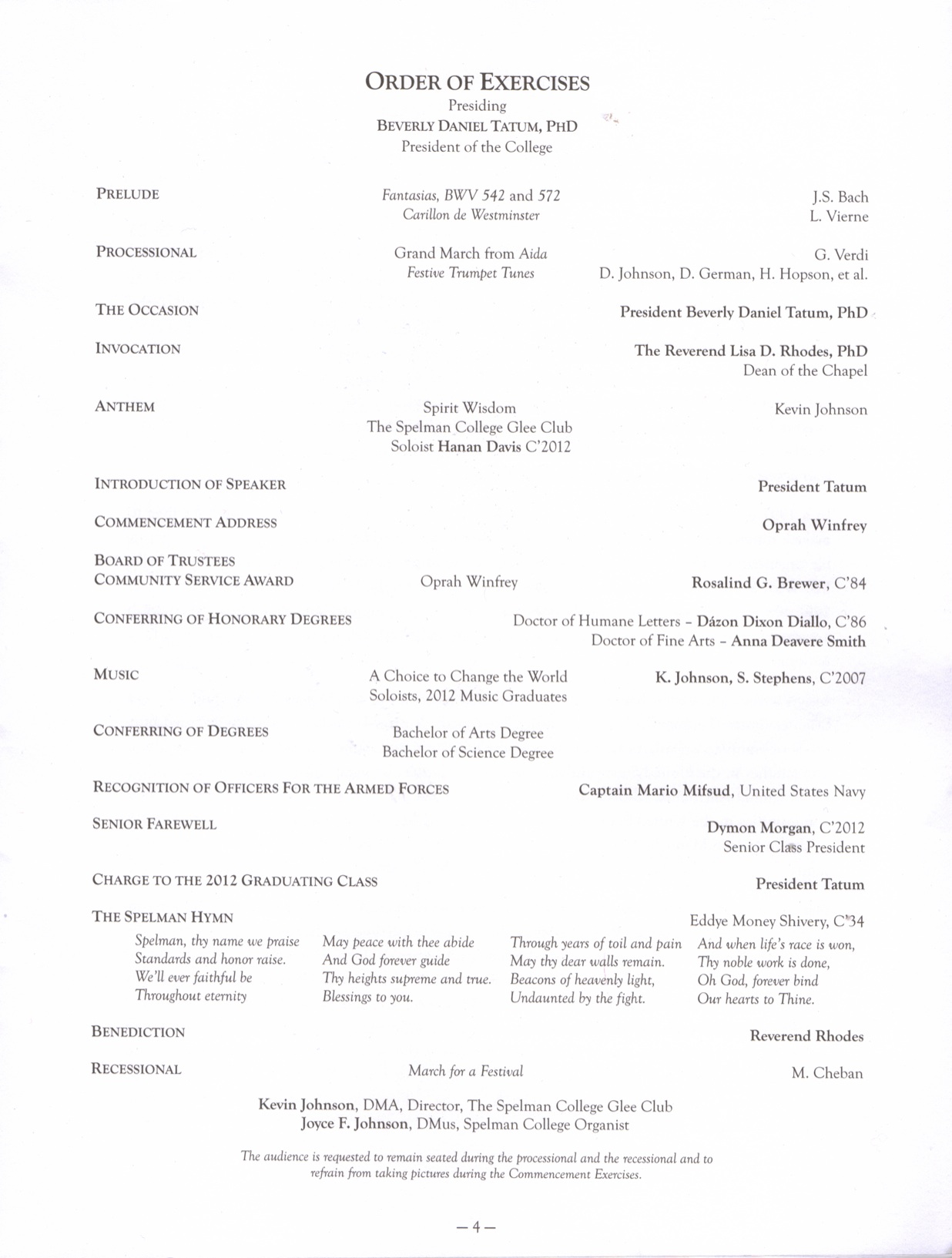
Spelman College’s 125th Commencement. Order of Exercises. May 20, 2012.

I had the great pleasure of being in attendance at Spelman College’s Commencement on Sunday, May 20, 2012. Oprah Winfrey offered the Commencement Address and she also was the recipient of the Board of Trustees Community Service Award.

What crystallized for me during her address was the clear distinction between Winfrey as an interviewer, a journalist, and the woman who is the subject of her own views. Perhaps because she has become a personality who rivals anyone she interviews, she captures your attention and your imagination; you can’t push her aside. Thus, when she interviewed Joel Osteen and Bishop T.D. Jakes for Oprah’s Next Chapter I thought I heard her answers to the questions she asked as much as I heard those men when I wrote about it for my blog. Now what I realize is that I had not heard Winfrey’s own unique voice; instead, I heard her meeting them where she thought their answers were and confirming that what she heard was accurate. Thus, “I get that,” doesn’t mean, “that’s what I think, too,” but it means something closer to, “I understand what you are saying,” because what I know for sure is that the Oprah Winfrey who spoke at the 125th Commencement at Spelman College as the subject of her own views certainly has an interpretation of what it means to live a good life that offers “another model by which to live.”

You can’t tell that this iPhone photograph shows Oprah Winfrey during the Spelman College Commencement ceremony.

Winfrey offered three charges to the graduates–an appropriate number given that three of her students from the Oprah Winfrey Leadership Academy in South Africa will be heading to Spelman in the Fall–that appear pretty straight forward: 1.) Know who you are. 2.) Find a way to serve. 3.) Always do the right thing. For Winfrey, who has been distinguished by the money, the power, and the acclaim that have come through her talk show, production credits, charitable gifts, magazine, and now her television network, it was significant that she made a very clear distinction between knowing who you are and knowing what you do for a living. (This was something that I have written about on this blog as a problem that I had with a scene from The Help when Skeeter asks Aibileen if she always knew she would be a maid and Aibileen replies “yes” as if she wouldn’t have made a distinction between working as a maid and being one.) Eschewing greatness through professional titles, Winfrey identified greatness with recognizing life forces beyond human control whose existence she encouraged everyone to accept as operating in their lives. Such forces as God, the Angels, and the Ancestors, who in the case of those black women whose lives were circumscribed in the United States and so may not have been able to realize higher visions of existence through the egregious and unholy acts of racist and sexist violence as it framed their own lives, Winfrey encouraged the graduates to see themselves and their matriculation as a stamp paid for by their ancestors. In citing Toni Morrison, Winfrey eloquently exclaimed, “your crown has been bought and paid for.”

For Winfrey, “your cup runneth over” was about being the recipient of all of the best intentions of the good life forces that preceded one’s singular existence. Being so wealthy in this way and giving generously to others, she said, would bring jealousy and animosity from others. Her advice was to find better friends. “When you have gallons of goodness to impart and to share with others, you cannot give your gallons to pint sized people,” she said.

Now this iPhone photo looks like the Oprah Winfrey you recognize! It was the best I could do.

Finding a way to serve makes for greatness and it is of the sort that is beyond fame. She cited Martin Luther King, Jr. Winfrey reflected on service as a common thread that connects legendary figures and encouraged the graduates to pursue this path. Winfrey discussed how in deciding to use television as a service through which she could try to improve people’s lives, she aligned herself with a greater civic purpose and mission.

“Always do the right thing” and you will know that it’s the right thing, Winfrey said, “because it will bring you peace.” She then imparted a story about a woman who was to be a guest on The Oprah Winfrey Show. The woman was a Bible School teacher by day and a sex machine/stripper by night. When Winfrey interviewed the woman and asked her why she wanted to tell her story the woman told her that she wanted to help people. That woman, however, had a ten-year-old son. After the interview, Winfrey told the woman that that interview would never air because Winfrey had such great empathy and concern for the one child, the woman’s son, who would be forced to contend with his mother’s story that she thought it reckless to promote it for public consumption. “The rating point” that might have occurred through such titillation, Winfrey contends, was not worth the potential loss to that child. Winfrey knew she had done the right thing because she had met with peace in the face of it.

Ultimately, Winfrey concluded that these three things-knowing who you are, finding a way to serve, and doing the right thing-will not only lead you to a gifted and rewarded life, but a “sweet life.” The “sweetness,” is important, she said, “because when you have had it, it gives you the comfort of knowing that ‘this too shall pass’ and that grace and mercy will meet you with warmth” again in the aftermath.

It was a lyrical address that included references from Isaac Newton to the character Celie from The Color Purple. She cited Langton Hughes, Toni Morrison, and Maya Angelou casually and effortlessly; dropping heavy inspiration without any great, or even apparent, appeal to a printed script. She dramatized her address. It felt authentic; and people responded as though they were in church. You could hear people saying “Amen” and see them raising a hand in witness. She definitely preached a sermon, and it was a good one because of its authenticity. She didn’t adopt a voice unoriginal to her own and she told a story that seems very familiar to her public character. Thus, it was a story about how to live well in a world that makes that exceedingly difficult. For her, as a black woman with her story, to be the Commencement speaker at an historically Black college for women, it gave the much needed hope that “catching hell” might just have a terminus.

Update: Spelman College has made their recording of Oprah Winfrey’s Commencement Address available on their YouTube Chanel. Here is the video of her extraordinary address:

Chief Lee’s Peculiar Confidence and the Troubling Role of Race in the Story of Trayvon Martin

I have continued following the Trayvon Martin case in the news since my previous writings on it. I continue to find it very upsetting on a number of levels–especially as the reports attempt to present the racial strands of this story as if they are marginal or obstructive. Race though, is quite central to this tale. In this case, race informs how membership in a community is constructed and who gets imagined as belonging. Race informed the way that George Zimmerman described Trayvon Martin to the 911 dispatcher. And what interests me about today’s headlines is how race works in tandem with il(logic). To that end, I do not understand the temporarily sidelined Sanford police chief Bill Lee Jr.’s failure to understand the poor work that his Department performed. Here is a brief sample of his remarks as they are integrated into an article in The New York Times:

Chief Lee, whose resignation was not accepted by the City Commission last month, said in an interview that his department’s work was as fair and thorough as possible.

“I am confident about the investigation, and I was satisfied with the amount of evidence and testimony we got in the time we had the case,” he said.

“We were basing our decisions, which were made in concert with the state attorney’s office, on the findings of the investigation at the time,” he added, “and we were abiding by the Florida law that covers self-defense.”

Quoted in The New York Times, May 16, 2012 by

Maybe because I’m not an attorney or a police officer, or maybe it is simply because I have no formal training in the law that I have no idea how Chief Lee’s remarks, ostensibly in support of the Sanford Police Department, do him any good. I don’t understand where his confidence in the investigation comes from. To claim that their investigation was controlled by their efforts to prove that George Zimmerman’s claims of self-defense were true commits the fallacy of begging the question; doesn’t it? Aren’t they assuming the conclusion that they are supposed to be trying to prove? If you are truly investigating a case then that means that they should be trying to determine what actually happened. How can you be doing that if you are governed by the conclusion, which in this case would be the law that you are using to guide your search. It would have been one thing to claim that you were confident that your Department thoroughly investigated all of the possibilities related to a claim regarding self-defense but he assumes that assertion as true already.

This just doesn’t seem like a good way to pursue a solid conclusion. When I have been ill, the best doctors don’t just take my word regarding my ailments and treat that claim as the official diagnosis. The diagnosis that I might even present to the doctor upon an initial consultation spurs their inquiry. The doctor who I have come to visit first performs her own examination, then she asks to see the notes, examination records, x-rays, and other documents compiled by my other doctors. She then uses those reports to support her own observations and tests. All of the information gets used to determine an illness, but the best doctors don’t start from the diagnosis and work backwards to prove it. They go on a search for a probable cause for why I am not feeling well, and this search begins with at least a question: What is wrong with you? Or: Why are you feeling poorly? In the Trayvon Martin case, it’s as if the local investigators set out to prove the diagnosis but never considered asking any questions. It would be like the doctor saying, “let’s prove that you have cancer” instead of pursuing what might be making you feel ill. These investigators do not appear to have been led by the most basic questions. I could have imagined the following as relevant: What happened here? Is this living witness a credible one? Are there reasons he would have to lie? Are there other witnesses? How do their stories compare? Instead, if these investigators had a question, it seemed to be this one: How can we show that George Zimmerman was standing his ground? That is a biased question. Thus, the biases in this case continue to haunt me.

It concerns me that we seem to struggle with how to talk about the history of race and its status as a metalanguage to examine the way that it functions in how we continue to make sense of our world. Through such an understanding of the ever-present, thoroughly entrenched quality and character of race to help us articulate meaning and order in our lives, I am interested in Lee’s claims of confidence in the face of his Department’s many failings. How do you explain administering an alcohol and drug test on a dead seventeen-year-old boy but not on the living man who shot him? How is that unbiased police work? How is that not a macabre extension of the narratives of racial profiling that plague this case?

When I read today that George Zimmerman’s family doctor confirmed a series of injuries that may corroborate his story, I thought about how the narrative of these statements compared to discussions that I had regarding a neighbor’s screams on Mother’s Day of last year. My husband and I awoke to a woman screaming for help at about 6:45 a.m. I heard her as clearly as if she were standing in my kitchen just a floor below. My husband and I jumped out of bed and ran to our bedroom window because her voice was truly so clear that we thought she was literally screaming from beneath us. He ran outside toward where he continued to hear her and I ran to get my son. By the time the scenario was over, we learned that she awoke to her attacker standing over her telling her that he would kill her children if she screamed. As he turned his head to apparently allow her to disrobe, she hit him and screamed. He got nervous and ran.

I told everyone I could about this and to a person, they all said, “good for her for not being silent and fighting back.” I remember wondering if I would have had the courage to defend myself or if I would have been paralyzed by the horror of what was happening to me; or if I would have taken the chance on him hurting my children had I screamed. It was a moment that I vividly recall hoping to never have to test in my own life. I don’t want to know if I would have that kind of courage in the face of such an urgent danger; hypothetically, though, if I’m being honest, I’m just not sure that I would end up looking like a hero to anyone.

When I read the report regarding Zimmerman’s family doctor, I didn’t think that Zimmerman’s story was confirmed as much as I thought that Trayvon Martin thought his own life was worthy of defending. That when he was faced with the horrifying possibility that his worst fears might be realized, he decided to fight for himself. Instead of Zimmerman’s defense, I thought about Claude McKay’s poem “If We Must Die.”

If We Must Die
If we must die—let it not be like hogs
Hunted and penned in an inglorious spot,
While round us bark the mad and hungry dogs,
Making their mock at our accursed lot.
If we must die—oh, let us nobly die,
So that our precious blood may not be shed
In vain; then even the monsters we defy
Shall be constrained to honor us though dead!
Oh, Kinsmen!  We must meet the common foe;
Though far outnumbered, let us show us brave,
And for their thousand blows deal one deathblow!
What though before us lies the open grave?
Like men we'll face the murderous, cowardly pack,
Pressed to the wall, dying, but fighting back!

See Also: 

For more posts on Trayvon Martin, see the A Heap See Page.

Models Monday: On Being “Caught Up”

It was Mother’s Day yesterday and I spent a lot of my wonderful time in peace and quiet thinking about my father. I guess about a week ago now, I wrote in a post that the rapper T.I. reminded me of my father because he is “a talented, charming guy with lots of potential who keeps getting caught up in things far beneath his thoughtfulness.” I knew that I would need to return to those words because I am still struggling through the idea that people get “caught up” in as many things that go wrong in their lives as they claim; or better yet, to stay current, I should use President Obama’s language here, and say that I am “still evolving” concerning my views, which I think is fair when you’re trying to be a thoughtful person. Anyway, I was writing to a cousin who was in prison several years ago and in his letters, he never failed to express his desire for a better life outside of prison in language that forewarned of his doom–as far as I was concerned, at least. He would say things like, “I just hope that I don’t get caught up in the same stupid stuff that got me here in the first place.” And I thought but did not say, “well, if your mistakes resulted from mindlessness, then you will get “caught up.” In part though, I didn’t say that because I don’t fully believe that people who are imprisoned are always guilty or that they aren’t targeted. I do believe that people of color are targeted and made into criminals by the criminal justice system. I believe that what Angela Davis refers to as the “prison industrial complex” is profitable and in America, if it is profitable it persists.

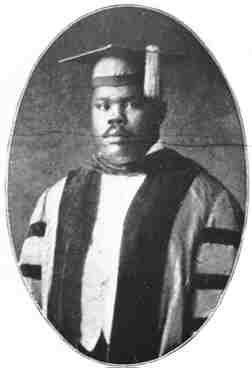
Marcus Garvey in ceremonial robe. Visit UCLA’s African Studies Center as the original source of this image and others.

So I’m not fully convinced by my own critique of being “caught up.” I do know that it can happen. Marcus  Garvey informs my views on this as well; especially as they merge with Hip Hop. Marcus Garvey was the founder of the United Negro Improvement Association (UNIA) who proffered an oppositional message regarding the value of seeking a homeplace through a return to Africa and a beauty ideal that privileged blackness. Together, these views galvanized a vast majority of poor and working class black men and women in reference to being “caught up” in the everyday indignities of discriminatory cruelty. Garvey’s vision of going back to Africa involved building a shipping line, the Black Star Line, that would provide for the passage of blacks throughout the diaspora on their journeys home. The Black Star Line was incorporated in 1919 but three years later, it had fallen prey to internal dissension, mismanagement, and expensive repairs. The UNIA had been the subject of harsh criticism and they suffered harassment from the U.S. government. In 1922, the federal government indicted Garvey for mail fraud involving the Black Star Lines’ promotional claims and sentenced Garvey to prison. In Garvey’s letter to his supporters upon his incarceration, “First Message to the Negroes of the World from the Atlanta Prison (1925),” he tells them that he has not abandoned them in life nor will he abandon them in the afterlife. Garvey writes:

If I die in Atlanta my work shall then only begin, but I shall live, in the physical or spiritual to see the day of Africa’s glory. When I am dead wrap the mantle of the Red, Black and Green around me, for in the new life I shall rise with God’s grace and blessing to lead the millions up the heights of triumph with the colors that you well know. Look for me in the whirlwind or the storm, look for me all around you, for, with God’s grace, I shall come and bring with me countless millions of black slaves who have died in America and the West Indies and the millions in Africa to aid you in the fight for Liberty, Freedom and Life.

“Look for me in the whirlwind…” I think about Garvey when I hear Tupac’s “Me and My Girlfriend (1996).” I hear it as an interpretation of this Garveyian sentiment to remain relevant despite an apparent demise. It offers hope to those in a storm.

“Me and My Girlfriend” appears on Tupac’s final studio album, The Don Killuminati: The 7 Day Theory, recorded before his fatal shooting on September 7, 1996. Death and resurrection as they appear in tandem in Garvey’s letter to his supporters also serves as a theme in Tupac’s lyrics. In fact, ‘Pac was rapping under the stage name “Makaveli” on this CD in tribute to his rebirth. “Me and My Girlfriend” entangles love and violence quite seamlessly. The “girlfriend” being the 45mm gun that he keeps as a faithful and loyal companion while navigating the harsh ghetto life that confines him. This personification suggests that there is much truth to the claim that despite their previous beef, ‘Pac was greatly informed by Nas’s “I Gave You Power.” In addition to this text as one that informed him, I think that ‘Pac’s reading life and his legacy as a child of a Black Panther suggests Garvey’s influence. The tone of Garvey’s letter from prison that looks directly at his bleak fate and yet remains defiant before it finds a place in Tupac’s voice as an echo of Garvey’s words. The first words Tupac utters after the gun, personified through the voice of a “Bonnie,” are “Look for me/Lost in the whirlwind.” He also ends the song with these words. The passion that Tupac has in this song authenticates his claims of feeling lost. His choices are so constrained by the violence of the world he was born into that he can’t see “another model by which to live,” it just doesn’t seem possible or plausible given the world he’s in. His resides in a world where romantic love is indistinguishable from violence. While this seems to be just the kind of experience that calls for “another model by which to live,” I also understand how impossible it might seem. A great many ‘hood tales show that the outcome of “having other models by which to live” only sets in relief the tragedy of the alternative through the death of one of its members (think Boyz n the Hood). That is to say, staying “n the hood” with “another idea” about how to live risks your very breath or at the very least, your potential for sustained joy. So how do we live in different worlds with our new ideas? How does one forsake the good that they know to exist in the place that they knew as the world, for a chance at a new world with no assurance of any of those same goods? We don’t talk about this a lot in the States, but people’s choices are often constrained (by poverty, race, gender, age, outlook, education, health care, disability, geography, transportation, language, etc.). So how do we redefine our worlds in light of these pervasive constraints? Garvey was a figure of hope for just this sort of spirit that felt “lost” in the whirlwind. His promise suggests that there could be hope even in turbulence. I think this is precisely why so many people found Tupac attractive. He seemed to understand their turbulence and his voice offered them at least the hope of recognition.

In part, I think any way out, any way of seeing sunlight in a storm, involves being alert. If you are really paying attention to your life, the patterns that come to define the rhythm of your days and that of those around you, then you are the recipient of  valuable information. This is true of the hustler’s days as well as the homemaker’s. I remember finding myself in situations where I would ask, “how did I get here?” But when I heard myself say, “how did I get here again,” I knew that I needed to do some serious thinking. Of course, I prized the tools of critical reflection. So maybe I can’t answer those big questions that I posed above today, but I can at least make a pitch for valuing non-material things like getting still and being quiet; about valuing self-reflection, honesty, courage, thoroughness, meticulousness, reading, and writing that don’t require any money but are necessary for living a good life in the face of the constraints that set the plot for where we find ourselves. I can’t say enough about sharpening these skills for improving the quality of your days.

I wish we still had my grandfather’s presence and his thoughts “that would bust yo’ brain wide open,” to influence us from his position on the porch. Our front porch was a gathering place for people who came by to talk about the ways they felt trapped or “lost in the whirlwind.” I try to use my blog to extend my front porch. To have a place for healing, recuperative talk. To have a place to remind us that a good day can be one where you rejoice over the slide of cucumbers and tomatoes from your home garden chillin’ in vinegar mixed with water and a touch of sugar; a good day can be spent looking through photo albums and thinking about the lives of loved ones long before you were ever considered; a good day can be one spent reading books or listening to old records thinking about what it was like to live under the influence of those words and those songs; a good day can be one where not a single dime gets spent, but where you get “lost” in your own thoughts about what life has been and what it could be if you adapted “another model” for it.

Living Civil Rights in the Age of Obama

I am happy that President Obama has made a statement confirming his support for marriage equality. I have long been disappointed in the denial of the civil right to a legal union for same-sex couples in the United States. Being gay in America should not place you outside of citizenship. I am proud of the President for making this stand today. Like so many others, I believe that his support makes a powerful statement and that it gives some hope to children who struggle with being able to claim who they are for fear of being ostracized. Perhaps the President widened the circle of inclusion today.

The Songs of Your Life

I read these remarks from an interview with Eddie Levert in the Huffington Post and I was stunned:

I really wanted to work with a lot of the hip-hop artists. I really would love to work with R. Kelly, I really would love to work with Kanye West, I would love to work with Jay-Z, I would love doing things with these people. But until I can prove to them that I am worthy of being in their presence and that I can be an asset to what they’re doing also, and I think that I was really looking at this album to be the one to prove [to] them that I am still [a] valuable artist.

The headline for the interview drew attention to Levert’s claim that “every girl is not a freak,” and while I think that it’s a shame that such a view has become remarkable, this was not his most stunning assertion. I like Jay-Z well enough–I especially like his public persona. I appreciate that he and his wife help to maintain the importance of privacy as a value in a culture that strives to erase all boundaries between public and private life. I appreciate Jay as an artist when he’s performing live more than I like his records. As a lyricist, I actually prefer Kanye. Though he and Jay both show a knowing appreciation for words in their bending of lyrics to fit a rhyme, I actually think Kanye does this to superior effect; perhaps because his personality seems to allow for a greater range of personas; Jay prefers the cool alone. However, having said all of that, I think it newsworthy that Eddie Levert feels the need to pander to them (“But until I can prove to them that I am worthy of being in their presence…”)! I mean, come on, we’re talking about EDDIE LEVERT, who as a member of the O’Jays sang, “Darlin’ Darlin’ Baby,” “Back Stabbers,” “Use Ta Be My Girl,” “I Love Music,” “Brandy,” and “For the Love of Money.” I mean, will you please take a moment to look at this video (if it doesn’t play, follow the link):

They are gettin’ it! This is the way it is supposed to be done.

Like most things that are good, you can get old to Eddie Levert’s music. In the video above, the O’Jays are still moving the crowd and looking as smooth as ever (!) doing it. They help to define the cool that Jay-Z enacts. All music owes its existence to an archive and none more than Hip Hop makes this more obvious. Sampling is like an old loft that makes its former life as a warehouse apparent. Of course R. Kelly, Jay-Z and Kanye West know of Eddie Levert’s relevance–don’t they? Wouldn’t they have to?

Though I came of age with the birth of Hip Hop, you couldn’t have told me that Stevie Wonder, Marvin Gaye, Otis Redding, Al Green, The Spinners, The Dazz Band, and The Gap Band were irrelevant or not a part of my generation. They were all so much a part of my acoustic life that I was sure they belonged to my time. It wasn’t until I got a job working in an Archive that I realized that I had received an education right at home.

I worked in Special Collections for a few years processing the William Levi Dawson papers. The people that I worked for were amazed by the artists that I recognized in the photographs in his archive. Dawson had been a composer and musical director for the Tuskegee Choir. Some of the photographs were taken by C.M. Battey and others by P.H. Polk, who had both been important photographers for their beautiful work documenting the life and culture of Tuskegee Institute as well as of the city and its residents. I’ve always been interested in photographs because of the presence they assumed in my life growing up, but I hadn’t realized how much I learned from them until I started being asked to identify black people in photographs in other collections at the library. As I did it, I recognized that the skill came from home, not school. I saw many of those faces on album jackets and on magazine covers. At the time I wouldn’t have recognized a Miles Davis tune by ear, but I certainly knew what he looked like. As I matured, I wanted to recognize him by how he played as well. I considered it a part of my education to know the music of my grandparents’ generation–my parents insisted that I know theirs. Parents used to impose their culture on children. When an adult was around I didn’t have a choice about what I was watching on television or about what I was listening to on the stereo or radio. As a result, I knew The Temptations, The Four Tops, The Supremes, The Jackson 5, Donny Hathaway, Hall and Oats, The Bee Gees, Michael McDonald, Steely Dan–and “the beat goes on” (The Whispers).

If you aren’t making your children listen to the music that you grew up with, then make a promise to yourself that you will start doing that today. You are denying your children a valuable education when you neglect to provide them with a musical heritage; otherwise, television takes over. If a child learns music from television, they are likely to mistake the voice and sound of the Great American and Soul songbook for a jingle. You cannot allow your children to believe that Marvin Gaye and Tammy Terrell’s music was about ice cream and chocolate bars, or that The Temptations and The Four Tops were singing about dust mops and sweepers. Young people need to know that Eddie Levert and the O’Jays are still relevant.

Models Monday: Living Other Models in the age of Obama

Barack Obama accepting his party’s nomination for the Presidency in Denver, Colorado August 28, 2008.

And Democrats, we must also admit that fulfilling America’s promise will require more than just money. It will require a renewed sense of responsibility from each of us to recover what John F. Kennedy called our “intellectual and moral strength.” Yes, government must lead on energy independence but each of us must do our part to make our homes and businesses more efficient. Yes, we must provide more ladders to success for young men who fall into lives of crime and despair. But we must also admit that programs alone can’t replace parents; that government can’t turn off the television and make a child do her homework; that fathers must take more responsibility for providing the love and guidance their children need.

Individual responsibility and mutual responsibility–that’s the essence of America’s promise.

In his acceptance of the Democratic party nomination for President of the United States of America, Barack Obama called for “other models by which to live,” and that seemed to be what people were longing for him to show us. In his acceptance speech, he acknowledged the responsibilities of the government for people’s lives but he also stressed the responsibility that individuals had for making discreet and intimate changes that would show a commitment to the enhanced lives people claimed they wanted. “Each of us must do our part,” he said. “Programs alone can’t replace parents,” he continued and suggested that the work of parents involved turning “off the television” and making “a child do her homework,” and for fathers to provide “the love and guidance their children need.” I think that Barack Obama’s humility is authentic, and so he did not realize that people wanted him to tell them what to do everyday to make their lives reflect the kind of responsibility he was calling for them to assume. I don’t think he realized that people wanted him to give them instructions for how to go about making the decision to turn off the television. “What did that actually look like?” people wanted to know. “If I turn off the television, then what?” I don’t think that Barack Obama realized that people wanted to do more than just look at his life to see how they might live, I think people wanted him to tell us.

Michelle Obama seemed to understand this better than her husband.

In one of her earliest public efforts as First Lady, Mrs. Obama planted a vegetable garden at the White House, the first of its kind since Eleanor Roosevelt’s Victory Garden in 1943 during World War II (the Clinton’s grew vegetables in pots on the White House roof). In planting the garden, the First Lady offered a model of what it looked like to take seriously the health and nutrition of one’s family. She also talked about it; brought people in to see it; wrote a book about it; shared the produce. While she acknowledged that she had a lot of help and that everyone might not be in a position to plant a garden, she made suggestions for those families to begin eliminating processed foods from their kitchen cupboards. When I was a child, having a garden was not something that anyone perceived as a luxury of the elite who could afford a staff. Usually, having a garden was associated with the migration of families from the South who brought with them the skills of making the earth yield foods that corresponded to the memories of what their families grew at home. Thomas Greer, one of my dear friends and next door neighbor from Cleveland, told me once that his favorite thing to grow in the garden was tomatoes because “he remembered his mother growing tomatoes in her garden.” Thomas and his beloved wife and my dear friend Betty kept a garden for as long as I can remember; as did my grandparents. The Wilson’s who lived next door to Betty and Thomas were considered master gardeners. They actually grew cantaloupe and watermelon in addition to the peppers, tomatoes, collard greens, cucumbers, and sometimes zucchini that everyone else grew.

Like her husband though, Mrs. Obama made choices in her life that do not reflect a dominant trend and yet she does not seem to tout these choices as unique. I’m thinking specifically of her decision to live at home with her parents while she worked as a corporate attorney at Sidley & Austin, “one of the biggest and most prestigious corporate law firms in Chicago.” I have only ever read this detail in one place (the Chicago Magazine link that I provide here) and I have been in attendance for a Commencement address where Mrs. Obama discussed leaving the law firm for more meaningful work and accepting less pay, but she didn’t mention living at home with her parents. I wonder why?

My guess is that Mr. and Mrs. Obama both seem to take for granted the many interesting choices they make in living deliberately and in the process offering “other models by which to live.” For example, I think it’s interesting that Barack Obama lived in an apartment as a Senator that his staff told him was worse “than [where] his 25-year-old employees” lived. Michelle Obama wouldn’t even sleep there. What influences the Obamas to make choices beneath their means? When Mrs. Obama worked for Sidley & Austin one can imagine that she could have afforded a place to stay while saving money. The same is true of Mr. Obama when he was a senator. How do they think about how to spend money on property? While the President and the First Lady are thought very fashionable now, an image of Mr. Obama’s shoes during the campaign for the presidency did not sartorially reflect the jazz man’s cool that he projected.

Barack Obama’s worn shoes.
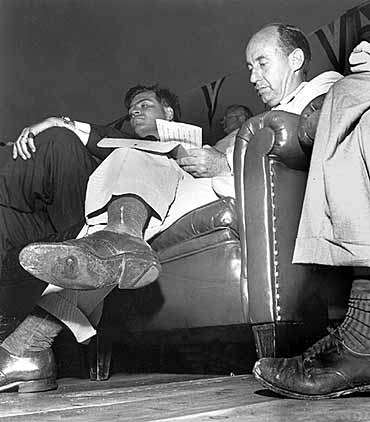
Adlai Stevenson’s “Boston Cracked Shoe.”

The image of Obama’s worn shoes reminded many of William M. Gallagher’s 1953 Pulitzer Prize winning photograph of Democratic presidential candidate Adlai Stevenson II. It would be interesting to hear how Barack Obama would describe his view of good shoes.

The Obamas lead very attractive lives. What is interesting to me is that they’re doing it at a time when representations of their class in popular culture are so strikingly ugly. American popular culture makes wealth appear synonymous with waste. Wealthy people are those who are marked by all of their excesses. In this climate where wealthy people and those who are striving to be wealthy desire multiple mansions, expensive cars, and costly clothes, the Obamas are interesting because they make choices to live in ways that seem within reach of more people.

As I was reading David Maraniss’s article in Vanity Fair about Barack Obama, I couldn’t help but to be impressed by the strength of his thinking as he conveyed his ideas through letters to one of his former girlfriends. It seemed to me that as much as he was struggling to define his racial identity, the importance of having an interior life that he cultivated and pruned was a significant aspect of his identity. I would be interested in hearing Obama discuss the relationship between his interior life and the exterior presentation of himself. More specifically, I am interested in his interior life and what it has meant for him to have money. It seems to me that the rich interior life that he has diminishes his need to spend money to appear wealthy–but that could just be my own bias.

The Obamas are interesting people. Despite Barack Obama’s reluctance to offer a step-by-step program on how he gets through the day and suggestions for how we should, I do think that looking at his life and his choices suggests a model. The same is true of the First Lady. Together, they offer alternative ways of approaching life and imagining what makes it good.

A Critique of “Young Barack Obama in Love”

It has taken me days to read “Young Barack Obama in Love: A Girlfriend’s Secret Diary,” the story that David Maraniss adapts from his biography of Obama entitled, Barack Obama: The Story. It has taken me so long not because of its difficulty or its length but because I have been trying to figure out the love story itself–well, not really figure it out, but find it. I was at first troubled that the story involved the letters and journals of the President’s ex-girlfriends. It seemed to be rather tacky of them to share this material given that the President is married and has two daughters. I am someone who finds it problematic that women who allegedly had affairs with John F. Kennedy make up a sub-category of books within the genre of presidential biography. In Obama’s case, it just seems to be in poor taste to have his family have to encounter aspects of his past romances as though they have some urgency. This article seems to give these women romantic currency in a way that they did not have for Obama. To that end, one of the most talked about moments in this article occurs when Genevieve Cook reports the time when she told Obama that she loved him and he said, “thank you.” Cook, and perhaps Maraniss, read this moment as an example of Obama “appreciating that someone loved him.” However, I find this a rather duplicitous claim. It suggests that he was insecure and that Cook’s declaration fulfilled a constant need of his. What it doesn’t acknowledge is the sort of view that Demetria L. Lucas offers. Lucas sees Obama’s response as evidence of the fact that he “just wasn’t that into” Cook. Even though in the interview with Maraniss, Obama admits that the woman that he claims to love is a composite of his girlfriends, it’s as though the article refuses to admit that and insists that Obama loves Cook as a singular subject but could not say it. My reading, in line with Lucas’s, sees Obama as very much a gentleman who did not say what he did not mean. It seemed to me, at least from what was written, that he did not love Cook and so he did not say that he did. Instead of considering his response in the context of his graciousness, Cook read Obama as “guarded.” From my point of view, I thought Obama offered a very smooth response. He didn’t cooly reject Cook, he accepted her love as a gift to which he responded with the proper courtesy. This reading is one that may come from the Maraniss article, but it doesn’t fit with the overall representation of theirs as a love story.

What I found much more interesting about the story was how voraciously, thoughtfully, eloquently, honestly, and deliberately Obama wrote and read. His approach stood in stark contrast to the way that Maraniss interpreted Cook’s reading and writing about Obama. Thus, it seemed a glaring omission when she wrote that she experienced Obama as being behind a “veil” and Maraniss makes no reference to the preeminent writer, scholar, and activist W.E.B. Du Bois who famously wrote this about the experience of being black in America:

the Negro is a sort of seventh son, born with a veil, and gifted with second-sight in this American world, –a world which yield him no true self-consciousness, but only lets him see himself through the eyes of others, of measuring one’s soul by the tape of the world that looks on in amused contempt and pity. One ever feels his twoness,–an American, a Negro; two souls, two thoughts, two unreconciled strivings; two warring ideals in one dark body, whose dogged strength alone keeps it from being torn asunder.

Granting attention to Du Bois’s Souls of Black Folk would have made sense in this context given that the article attempts to paint Obama as being driven by his search for identity. Instead of engaging Du Bois directly, however, this article only proves the reason why Obama needed to keep reading Ralph Ellison’s Invisible Man. In the interview that Maraniss gives to Vanity Fair, he reveals that he entitles one of the chapters “Genevieve and the Veil.” I can only hope that he cites Du Bois there.