In this new assignment that I made for myself, I am setting out to discover a fuller portrait of the people celebrated in February for Black History Month. I’ve been doing this work for some time now, so I guess the difference with the current manifestation of this project involves history, subjectivity, and celebration/commemoration and not just pure curiosity. My son’s Black History Month assignment inspired me to learn more about the typical Black History Month cast. My son was charged with the task of creating a poster reflecting Thurgood Marshall’s achievements and with remembering a few broad facts that reflected Marshall’s distinction: “I am Thurgood Marshall, the first African American, Supreme Court Justice of the United States of America.” While preparing this assignment, I realized that I didn’t know much about Marshall beyond what my son claimed and the role Marshall played in arguing Brown v. The Board of Education before the Supreme Court.
Just yesterday, I finished listening to the audio version of Gilbert King’s Pulitzer Prize winning book, The Devil in the Grove: Thurgood Marshall, the Groveland Boys, and the Dawn of a New America, and I found it to be exceptional; mostly because I learned that Thurgood Marshall was a superhero! Marshall would literally travel into the bowels of hell (a.k.a. the American South) and come out alive and victorious after challenging terrorism and injustice against black Americans. Being a black American lawyer in the 1930s and ’40s for black clients in the South meant traveling in Jim Crow cars on trains, depending on the kindness and generosity of other courageous black Americans for food and lodging, managing persistent threats from terrorist groups like the Ku Klux Klan without the protection of police who were often Klansmen themselves; it was difficult work on every level. The clients Marshall served were too poor for the work to come with great financial rewards so his motivation speaks to having a life’s purpose beyond money. For Marshall, justice for black Americans and the opportunity to live fully with dignity and integrity reflected that purpose.
Norah Jones’s rendition of the Gene Scheer song “American Anthem” hits all the right notes and it frames my thoughts about this Memorial Day.
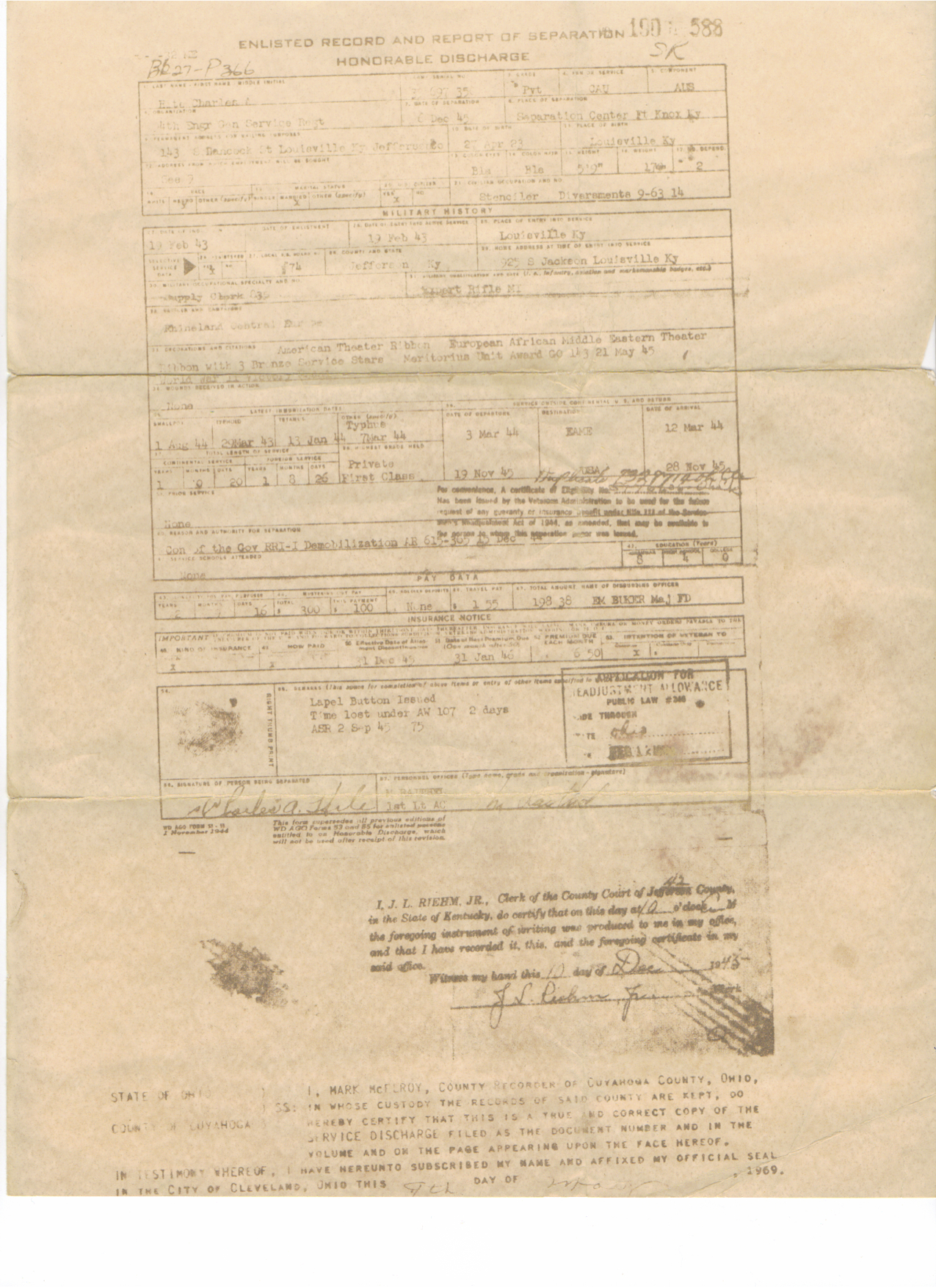
My grandfather, Charles Albert Hite, served in World War II and by all accounts he was none too happy about it. My Uncle Eric wrote about my grandfather’s views on serving in some of our correspondence. According to Uncle E’s memory, my grandfather “listened to FDR’s speech promising all them mamas that their boys would be safe from the draft, but if I can remember correctly,” notes my uncle, “he and Uncle Frank received their draft notices the next week.” What isn’t apparent from the Honorable Discharge report itself and my grandfather’s frustration with FDR involved his enlistment date on February 19, 1943: my grandparents were married only six days before he was drafted on February 13, 1943.
The Honorable Discharge report shows that my grandfather mastered the rifle, but according to my Uncle E, my grandfather had no interest in using his skills. “I can remember the Ole Man being angry at the Blacks back home who constantly went to the press about wanting the Blacks to have a bigger participation in the War effort,” he writes. According to my uncle, my grandfather “didn’t like that shit at all.” In fact, my uncle continues, “he was real cool with ‘digging ditches,’ and didn’t want nothing to do with the fighting.”
Today, as it is Memorial Day, I think about my grandfather’s service now through the lyrics of Jones’s resonant voice–even though those lyrics don’t quite fit his story. When I think of my grandfather, I wonder how he must have processed going into war with a new wife and and a baby on the way. I wonder how flimsy hope must have felt to him as he thought about making it back to them. My grandfather was fortunate since he did return to his wife and son. Today, I’m wondering about the soldiers he met who didn’t make it back. Did they have young wives and children who inspired their dreams of making it through the war? For my grandfather, Norah Jones’s bluesy, plaintive voice doesn’t quite strike at the core of what he might have been feeling–Louis Armstrong’s (What Did I Do to Be So) Black and Blue best captures the frustrations of a Black man from the Jim Crow South sent off to fight for a country that did not even protect him from Kentucky. When I imagine the friends that he might have lost, though, Norah Jones’s tender, raspy voice moves in deeply when I think of their mothers. I think of the soldiers telling what they might have believed but when Jones sings “America, America, I gave my best to you,” I imagine their mothers singing that part and I am deeply moved.
I know a lot of folk who celebrate Memorial Day with barbecues and picnics on Sunday. When I look around my neighborhood, there aren’t too many folks partying today, which seems appropriate. Today should really be a day for thinking about those mothers who gave us their “very best.”
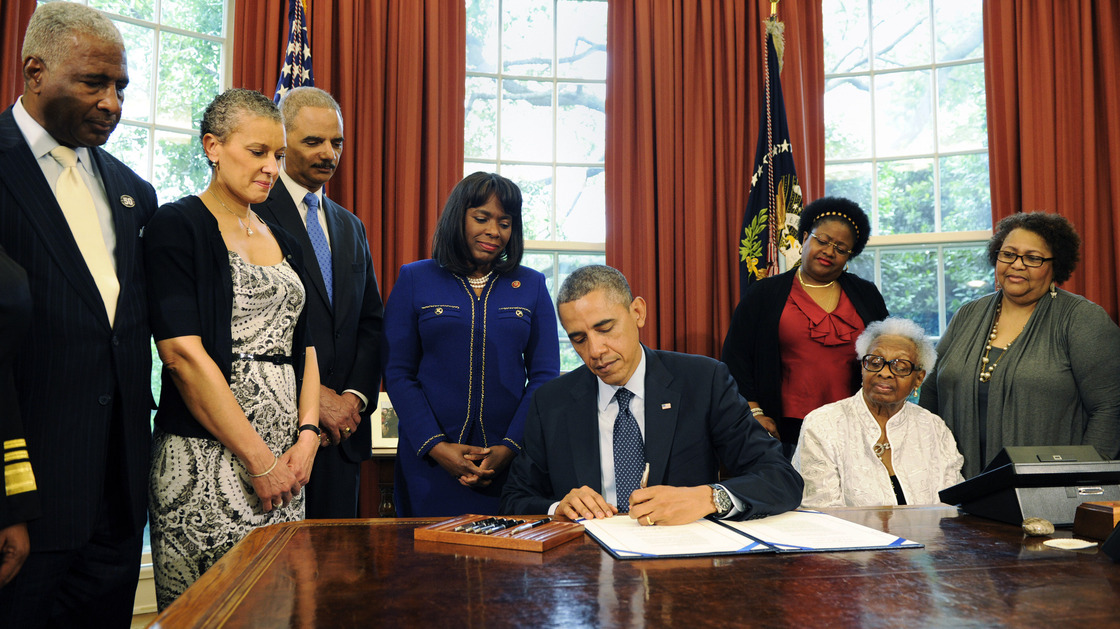
The Congressional Gold Medal has been posthumously awarded to four girls killed in the 1963 bombing of Birmingham’s 16th Street Baptist Church. President Obama signed the legislation Friday, as (from left) Birmingham Mayor William Bell, Dr. Sharon Malone Holder, Attorney General Eric Holder, Rep. Terri Sewell, and relatives of Denise McNair and Carole Robertson look on. Photo: Pool/Getty Images found at NPR
Today, President Obama signed legislation to award the Congressional gold medal to the four little girls who were killed in their home church on September 15, 1963. The Robertson and McNair families have been supportive of the legislation since it was proposed but members of the Wesley and Collins families have not. The latter families believe that the medal inadequately compensates them for their loss. To support her case, Sarah Collins Rudolph, Addie Mae Collins’s sister and the fifth girl in the ladies lounge with the four girls but who survived the blast, lost an eye and suffered other ailments; as a result, she continues to have medical bills that need to be covered. To that end, Rudolph contends that the medal does not address the material conditions that directly stem from the racist terrorism of the past.
When I was reading bloggers’ comments concerning the posthumously awarded medal, one of them, Collin Walker, asserted that awarding the medal to the girls devalues it. Quoting requirements for receiving the medal, Walker writes, “[f]or those who have performed an achievement that has an impact on American history and culture that is likely to be recognized as a major achievement in the recipient’s field long after the achievement.” Walker contends that awarding the Congressional medal to the four girls is inappropriate in light of this description because he believes that the girls’ achievement is their death. As he writes in one of his posted comments, “certainly victims shouldn’t get a ton of medals just because they died.” He asks, “[w]ho were the real leaders of the Civil Rights Movement? Those people are the ones who deserve medals.” Not realizing that the death he dismisses as the product of racist, white American resistance to civil rights gains helps to explain why awarding this medal to the four girls posthumously is most appropriate. As Martin Luther King, Jr. offers in his eulogy for the girls, they were “martyred heroines of a holy crusade for freedom and human dignity.” Thus, seeing the girls outside of the lens of activism leads to Walker’s claim that their death alone should not qualify them for the congressional medal. For King, and for Birmingham native Angela Y. Davis, the girls were political activists. In scholar Joy James’s reading of Davis’s response to the bombing, the girls figure as “young activists, who at the time of their death were preparing to speak about civil rights at the church’s annual Youth Day program.” Even before their death, these girls were engaged with the greatest issue of their day. Carole Robertson was also a member of the organization Friendship and Action that emerged in response to the 1954 Brown decision. Black and white parents and teachers created the group to facilitate peaceful relations between the children who would soon be schoolmates.
Walker also overlooks the limitations in the narrow way that he envisions leadership. He can’t seem to imagine decentralized leadership as he calls for the awarding of the Congressional gold medal to “the real leaders” of the Movement. Well, “the real leaders” were the domestics who walked in Montgomery for 381 days between 1955 and ’56, the children who marched and went to jail and, in fact, died in Birmingham in 1963, as well as the garbage men who proclaimed their manhood in Memphis in 1968. Their sacrifices led to desegregation, equal hiring practices, voting rights, and other civil rights achievements. As the historian David Garrow asserts:
what the carefully-scrutinized historical record shows is that the actual human catalysts of the movement, the people who really gave direction to the movement’s organizing work, the individuals whose records reflect the greatest substantive accomplishments, were not administrators or spokespersons, and were not those whom most scholarship on the movement identifies as the ‘leaders.’ Instead, in any list, long or short, of the activists who had the greatest personal impact upon the course of the southern movement, the vast majority of names will be ones that are unfamiliar to most readers. (In “Commentary,” Charles Eagles, ed., The Civil rights Movement in America, 57)
Addie Mae Collins, Denise McNair, Carole Robertson, and Cynthia Wesley deserve more than the Congressional medal, but we don’t always get what we deserve. Given that the Congressional gold medal is the highest honor the Congress can bestow, it’s the best that they have to give, then it is only fitting that this superlative go to those four girls.
My friend Carmen introduced me to the children’s book Flossie and the Foxafter I told her about my interest in cautionary tales about the dangers associated with becoming distracted. It was a great recommendation. Here’s the story: Flossie’s grandmother charges her with the task of delivering eggs to a friend at a neighboring plantation. Flossie’s grandmother warns her that a hungry, slick, egg loving fox is on the loose and to be mindful of him. Flossie has never encountered a fox before and doesn’t even know what one looks like. In response, her grandmother resists offering a thorough portrait; instead, she gives Flossie information that on the surface doesn’t seem very helpful, “Chile, a fox be just a fox,” is what she tells her before sending her off with two instructions: 1.) don’t dawdle, 2.) protect those eggs.
The charge given to young Flossie in light of the circumstances places this story in a world far beyond the boundaries of our own. Flossie and her grandmother live in a world where danger is inevitable. Since Flossie’s grandmother wasn’t trying to shield Flossie from danger, a contemporary reader might be led to conclude that her grandmother was essentially feeding that child to the wolves. Not only was Flossie sent out into the world with a cunning foe on the loose, she was sent with goods most likely to entice him. How is this love?
Flossie worries about her fate, as we would as contemporary readers, but it is through the way she processes her anxiety that we come to understand her grandmother’s love. “What if I come upon a fox?” Flossie wonders before remembering her grandmother’s words, “Oh well,” she thinks, “a fox be just a fox.” In other words, a threat is just a threat–it can take on any number of guises; it is nearly impossible to capture for a child just what that looks like. Too, a threat does not amount to its conclusion. Flossie’s grandmother sends her on a mission where she has a chance of flourishing. To flourish, Flossie’s grandmother tells her that she will need to be efficient and show great care. Flossie decides that she can confront the unknown and not be ruled by her fears.
While on the way to deliver “Miz Viola” the eggs, Flossie does indeed encounter the fox, and the way that she deals with this encounter offers a model for facing the world:
1.) Embrace the wisdom of your ancestors. Flossie does not dismiss her grandmother’s description of the fox as a failing; instead, she decides that her grandmother passed on useful information.
2.) Commit to a productive strategy. When Fox introduces himself to Flossie, she decides to tell him that she “just purely [doesn’t] believe it.” As Flossie continues to move along, Fox shifts his focus from the eggs Flossie carries to trying to convince her of his identity as a fox.
3.) Be aware of your authority to decide your identity. You are not responsible for other people’s expectations of who you are. At one point, Fox tells Flossie that “a little girl like you should be simply terrified of me.” Flossie disrupts Fox’s plan for terrorizing her because she rejected his vision of who she was and placed her authority in her own ability to name herself.
If you get a chance, read Flossie and the Fox. That little girl offers “a model by which to live.”
I read Joanna Connors’ insightful article regarding motherhood and the compelling and dramatic story of the rescue and recovery of Amanda Berry, Gina DeJesus, and Michelle Knight from a house of horrors just last week in Cleveland, Ohio. The article considers how rape, an ancient violence, helps to set in relief the capacity of mothers to stand firm for their daughters and to thus aid in their recovery. I read parts of the article to my mother yesterday and she described the difficulty she imagines for Amanda Berry in having to explain to her daughter that Ariel Castro, the man responsible for decades of brutality against the women, is her father. Though I do not discount the difficulty, in my reading, Berry’s daughter would seem less inclined to grand delusions regarding domestic life and thus may not need to reconcile the reality against a well-lit fantasy. Thus, I do not discount that child’s witness to Castro’s monstrosity in negotiating her world. Moreover, to Connors’ point, the long history of sexual violence against women gives Berry a catalogue of cruelties to draw from as models of endurance. In addition to the mythological examples that Connors cites, there are historical ones. In an American context, enslaved women who were routinely raped for both the slaveholders pleasure and profit offer a model. There are also the twenty thousand children said to be born from rapes during the Rwandan genocide. Jonathan Torgovnik erases the seemingly unknowable dimension of these stories in his book IntendedConsequences: Rwandan Children Born of Rape. The book features photographs, like this one of Valentine with her daughters Amelie and Inez:
Jonathan Torgovnik photograph from Intended Consequences: Rwandan Children Born of Rape
Torgovnik’s photographs are accompanied by interviews with the women, survivors of dastardly deeds. Valentine tells Torgovnik an achingly honest story of her growing feelings for her daughter who was the product of the unimaginable brutality she endured:
I love my first daughter more because I gave birth to her as a result of love. Her father was my husband. The second girl is a result of unwanted circumstance. I never loved her father. My love is divided, but slowly, I am beginning to appreciate that the younger daughter is innocent. Before, when she was a baby, I left her crying. When it came to feeding, I fed the older one more than the younger one, until people in the neighborhood reminded me that was not the proper thing to do. I love her only now that I am beginning to appreciate that she is my daughter too.
More of these stories are chronicled in a video entitledIntended Consequences that you can view by following the embedded link.
So many of us have made life work through “unwanted circumstance.” Valentine’s reflections remind us of the significance of community for helping us to grow and nurture love when it seems most unlikely.
I think it’s generally pretty true that when I typically read about African American life from the time between 1952 and 1968, I read about it through the lens of black American life. I certainly thought that I had a firm understanding of the character and the courage of those folk, particularly black southerners, in the midst of segregation. I am currently reading Dan Carter’s book, The Politics of Rage: George Wallace, The Origins of the New Conservatism, and the Transformation of American Politics, and it has made me rethink what I took to be my firm grip on the dignity and integrity of black southern life. Now when I think about the routine risks of living while black in the midst of segregation, I feel that I have neglected my responsibilities as a mature and conscientious person in not genuflecting before any black American who came of age during the height of Jim Crow.
Before reading this book, I was interested in George Wallace because he was the governor of Alabama at what I take to be an interesting and important moment in the nation’s history of race relations. Even more to the point of my own interests, Wallace was the governor when the Klansmen bombed the Sixteenth Street Baptist Church on September 15, 1963. 1963, the centennial year of the Emancipation Proclamation, Martin Luther King, Jr.’s famous “I Have a Dream” speech as well as the “Letter from Birmingham Jail,” is also the same year when Wallace offers his infamous inaugural address where he
proclaims “segregation now, segregation tomorrow, and segregation forever.” 1963 was also the year when governor Wallace made his notorious stand in the schoolhouse door in an attempt to prevent the
integration of The University of Alabama. In reading Carter’s book, Wallace has expanded from a person shamefully recognizable because of these dishonorable moments to someone I view as thoroughly reprehensible. There are moments when reading The Politics of Rage that I have to take a break because I really just don’t have the stomach for the ugliness and brutality reflected in nearly every aspect of Wallace’s life.
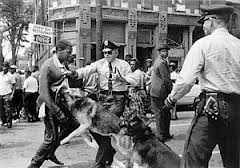
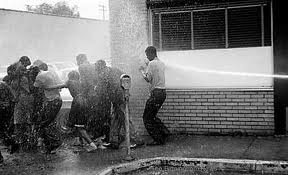
Birmingham Public Safety Commissioner Eugene “Bull” Connor usually gets credit for being the force influencing the viciousness of Birmingham authority against black citizens; rightfully so. This is the man responsible for turning angry dogs and powerful fire hoses against the tender flesh of children, some as young as six-years-old.
What Carter makes clear is that governor Wallace was the person responsible for putting people in place who would relentlessly and unmercifully enforce white supremacy. I now have a much better sense of how thoroughly blackness was held in contempt and how far people were willing to go in reifying this idea. For instance, I was appalled by how quickly Wallace was able to shift the focus of many white southerners from mourning over the death of Addie Mae Collins, Denise McNair, Carole Robertson, and Cynthia Wesley to an emphasis on the politics of race and fear. Though Wallace would allow that the explosion disturbed him, he went on to suggest that Communists or black Americans planned the explosion in order to gain publicity for their causes.
The vast number of people willing to embrace Wallace’s message shocked me. Carter quotes NBC analyst Douglas Kiker in describing Wallace’s appeal:
George Wallace had seemingly looked out upon those white Americans north of Alabama and suddenly been awakened by a blinding vision: ”They all hate black people, all of them. They’re all afraid, all of them. Great God! That’s it! They’re all Southern! The whole United States is Southern!’ (344)
According to Carter, “every survey of [Wallace’s] followers showed that one of the major sources of his national appeal lay in the perception that he was antiblack” (344). These views reminded me of James Baldwin’s words to his nephew in The Fire Next Time, also published in 1963: “you were born into a society which spelled out with brutal clarity, and in as many ways as possible, that you were a worthless human being” (7).
I’m not finished with Carter’s book yet. I’m only at the part where Wallace makes a bid for the presidency in 1968, so I’m far from the time when he gets reelected as governor of Alabama with support from Black southerners! How does that actually happen? In the video above, Vivian Malone, the first black American to graduate from The University of Alabama, suggests some of what I will learn as she confesses to her own sympathies for Wallace in his final days. It’s the kind of sympathy that I can only find myself wanting to genuflect before.
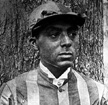
As National Poetry Month draws to a close and the Kentucky Derby approaches, I dedicate this post to poet Frank X Walker and his book of persona poems on Isaac Murphy, Isaac Murphy: I Dedicate this Ride. Murphy descended from slaves and rose to prominence as a jockey, winning the Kentucky Derby three times. The title poem of Walker’s collection and reprinted on the Affrilachia website offers a sense of the rich interior life Walker imagines for Murphy:
I liked Anthony Hamilton’s “Cool” the very first time I heard it. It’s a hopeful cut that suggests other models for finding joy and pleasure in life. The song soulfully challenges the notion that personal fulfillment necessarily derives from realizing the goals of the most casual of our “best laid plans.” Instead, Hamilton suggests that fulfillment may in fact derive from our ability to rethink our agenda and take pleasure in having another idea about joy, love, and happiness.
I’ve been thinking a great deal lately about representations of joy and fulfillment as they are presented in American popular culture. This presentation suggests that only rich people and solidly middle-class people know joy and fulfillment. I wonder what this representation does to those who fall outside of these parameters. Do they overlook the joy present in their own lives and the lives of others they know because of the difference it marks from the popular, overarching depiction? Do rich and middle-class people think joy and fulfillment are privileges only they enjoy?
One of the presumptions existing in popular American culture suggests that people want what celebrities have–their homes, their cars, their clothes. Television programs and magazine articles describing how you can have “this look for less” offers one example of this presumption. This point of departure assumes that viewers and readers find the look desirable. Such an entry point further supports the construction of the poor that feminist scholar bell hooks claims dominates popular culture. In her reading, representations of the poor overwhelmingly show them longing for material wealth and finding very little pleasure in their own lives. In general, it’s like the culture can’t even imagine poor and working-class folk thinking what Anthony Hamilton tells his friend, “if you’re cool, then I’m cool, then we’re cool.” The culture doesn’t presume that you can be poor, working-class and cool…but they’re wrong.
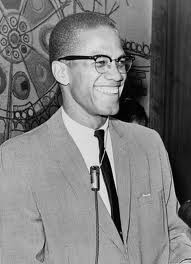
I was a girl when I first read The Autobiography of Malcolm X. Malcolm wasn’t a figure that I learned about in school but as someone coming of age in the ’90s, his name was referenced in rap songs and references were being made to him through the Xs emblazoned on t-shirts and baseball caps sported as popular fashion. I wanted to know who this guy was that seemed to be so popular for the older teens of my generation so I picked-up a copy of his autobiography–the one I still have all these years later.
I don’t know too many schools that assign The Autobiography of Malcolm X as required reading, but they should. His story, as told to Alex Haley, has music in it. As I read it, I heard jazz, my grandfather’s music, as the backbeat of his life’s story. I don’t know that I can explain where the sound comes from for me in the text, but the book definitely resonates acoustically. Perhaps the changes that Malcolm was forced to endure, initiated himself, and inspired others to make influenced the text’s sound. These changes certainly are what make his life an interesting one to contemplate. As critical of America as Malcolm was, the self that he fashioned from the losses that he endured, the home he was forced to give-up and remake, and the trials he suffered through to become a public person who tried to lead a moral and purposeful life makes for a very American story.
I’m currently reading James H. Cone’s book Martin & Malcolm & America: A Dream or a Nightmare so Malcolm has been on my mind lately. I’ve always thought about Malcolm through the lens of change but because Cone highlights the changes King makes in his own thinking about America towards the end of his life, I’ve been thinking a great deal about how public and open Malcolm’s changes appear when compared to King’s. King expanded his ideas about how and where suffering occurs, as a matter of class and not just race, he was not forced to admit that he was wrong in the way that Malcolm had to in his blind support and commitment to Elijah Muhammad; in his effort to build coalition through religion. Malcolm changed course in a very public way. He lived learning out loud.
My father was a great admirer of Malcolm’s. I think he was drawn to the in-your-face, assertive, confrontational form of masculinity that he offered. Towards the end of his life, my father liked to voice his own criticism of America through what I took to be his own Malcolm-like posture. My father wouldn’t have been a very good preacher, but what I appreciated about him in relationship to Malcolm was how publicly he lived out his faults and attempted to correct his mistakes. I’m sure it’s easy for certain kinds of personalities to boast and speak out with great volume, but no matter who you are, admitting that you’re wrong in that same pitch requires courage. As I saw with my father, it can also be very generous to share your faults, your humanity, with other people; I appreciate them both for that.
I’ve written here before about speaking to a group of college honors students about Malcolm. What I didn’t say in that post is that while the students on the panel were there to discuss Manning Marable’s wonderful biography about Malcolm, they all did so while noting that they had not read Malcolm’s autobiography. Apparently, The Autobiography of Malcolm X is not required reading for honors classes and though you would expect honors students to be curious enough to go and read the work for themselves, that isn’t happening…and I think that’s a shame. Reading The Autobiography of Malcolm X is certainly worth your time.
For a while I have been wanting to watch Of Gods and Men and this weekend finally presented me with the opportunity. The film offers a cinematic interpretation of the actual events surrounding the fact of French Trappist monks living in the mountains of Algeria whose commitment to cooperation between Christians and Moslems obligates them to remain in their community despite the very real threat from the lethal hands of Islamic Fundamentalists. While some of the monks were clear early on that they would not leave their home, others wanted to flee. Ultimately, those set on fleeing decided there was no where else to go. Though these men discussed their family lives outside of the ministry, they mostly felt themselves more at home with those they had created family with through their common faith. As different and perhaps even strange as their lives might have appeared to others, the men all searched within themselves and affirmed the authenticity of their fashioned ties.
The film was interesting because of its attention to the trembling fear of death for even those who appeared the most resolute about remaining in their besieged monastery. It was a compelling emphasis because fretting heroes aren’t readily apparent in American cinema…or American culture for that matter; in life though, this just isn’t true. Take Martin Luther King, Jr. as an example. Scholars who write about King agree that he was disquieted by the persistent threats to his life. For instance, in his Pulitzer Prize winning work Bearing the Cross: Martin Luther King, Jr. and the Southern Christian Leadership Conference, David J. Garrow offers the perspectives of King’s close friends and relatives on his anxiety regarding the violence he perceived in American culture and thus the violent end he expected to meet. Despite King’s public claims that he had made peace with the threats made against his life, privately he trembled. On one of these occasions, Garrow writes:
“The constant death threats and the reminders of Malcolm’s and [Jimmie Lee] Jackson’s violent ends, had put King in a morbid state of mind. As the March started out for the cemetery, King beckoned SCLC board member Joseph Lowery to come with him. ‘Come on, walk with me, Joe, this may be my last walk,’ King remarked in a bantering tone that did not conceal the serious concern underlying it” (394).
By 1967, King’s deep depression and melancholy worsened. Quoting his friends and longtime aides, Garrow noted the following:
“‘In the later years he was given to a kind of depression that he had not had earlier,’ Andrew Young recalled. ‘He talked about death all the time….He couldn’t relax, he couldn’t sleep….Even when we were away on trips, he’d want to talk all night long….And just physically, I was afraid,’ Young said, of how worn down King was. ‘He was spiritually exhausted.’ Longtime Birmingham friend Deenie Drew noticed the same changes. ‘In his last year or so, I had a feeling that [he] had a death wish….I had a feeling that he didn’t know which way to turn.’ Bayard Rustin, despite his public break with King, had a similar worry, and discussed it with Levison. ‘Both Stanley and I had some very serious talks because we thought Martin was becoming a little too concerned about the possibility of death.’ On one occasion, Rustin suggested that misgiving to King, only to be brushed off. ‘You think I’m paranoid, don’t you?’ Sometimes I do, Martin,’ Rustin responded. Young had tried to counsel King, but had met the same reception. ‘If you said anything, he’d brush you off.’ (602).
“You cannot hear the name Martin Luther King, Jr., and not think of death. You might hear the words ‘I have a dream,’ but they will doubtlessly only serve to underscore an image of a simple motel balcony, a large man made small, a pool of blood. For as famous as he may have been in life it is, and was, death that ultimately defined him.”
I actually read these works in the reverse order of how I have presented them here, but until I encountered Dyson, I had not really thought about King in relationship to the possibility of his own mortality. Though I agree with Dyson’s point about how death defines King’s public narrative, I think I understood it more as a fact than as a haunting element of King’s daily life that plagued or even consumed him. Perhaps I didn’t think about it because the culture doesn’t encourage the association between heroes and trembling; instead they’re marked by fearlessness…but it’s important to remember that human beings are afraid. What I liked about Of Gods and Men is that it underscored this fact: fear greats even faithful men.


 In Reverie Blog