If you haven’t read Chimamanda Ngozi Adichie’s novel Americanah, I highly recommend it. The story crosses international boundaries and thus speaks to issues of identity, class, home, education, and the contemporary world. One of the novel’s central character’s, Ifemelu, keeps a blog once she’s in the United States and creates another one when she returns to Nigeria. Adichie has not taken the fictional blogger and created new posts for readers through Ifemelu’s voice and not the author’s. If you get a chance, check out “Ifemelu’s blog.”
Chimamanda Ngozi Adichie Launches Real-Life “Americanah” Blog
Now, readers can catch up with Ifemelu through “The Small Redemptions of Lagos,” at AmericanahBlog.com. This new blog focuses on Ifemelu’s life in Nigeria, a kind of younger sibling to the novel’s incendiary and anonymous blog, “Raceteenth or Various Observations about American Blacks (Those Formerly Known as Negros) by a Non-American Black.”
The new installment is no less expressive. Ifemelu’s observations are piercing, even on such subjects as a leaky roof at a Lagos airport or a friend who needs to take better care of herself: “Don’t expect water to taste like Coke. It is not Coke. It is water. And it is better for you.”
In the first handful of posts, love interest Obinze (whom Ifemelu calls “Ceiling”) appears, along with best friend Ranyinudo. More characters are expected.
“Americanah” won the 2013 National Book Critics Circle Award for fiction and was selected as one of the 10 best books of the year by The New York Times Book Review, the BBC and Newsday. Earlier this year, actress Lupita Nyong’o (fresh off her Best Supporting Actress win for 12 Years A Slave) announced she had optioned the rights to Adichie’s book, with plans to star in and produce the movie adaptation.
In the meantime, readers will have the web posts to keep them primed. “Ifemulu does have an opinion on everything and why shouldn’t she be like that?” Adichie told an interviewer in March. “I wanted her to be like that. I admire her very much.”
At my son’s school, they’d prefer we go back to this…except on Friday when everyone gets to bring a book.
I’m currently re-reading Martin Luther King, Jr.’s 1963 work Strength to Love. In the introduction, he notes his hesitance in publishing this work because the “essays” are actually “sermons” and thus meant for a present, listening audience. This is important to keep in mind in reading this passage about the church that I find quite timely:
“As the chief moral guardian of the community, the church must implore men to be good and well-intentioned and must extol the virtues of kindheartedness and conscientiousness. But somewhere along the way the church must remind men that devoid of intelligence, goodness and conscientiousness will become brutal forcers leading to shameful crucifixions. Never must the church tire of reminding men that they have a moral responsibility to be intelligent” [all emphasis mine] (46).
So I read this wonderful line in King’s text yesterday and today I received a beautifully handwritten note from my son’s teacher, at the Christian school he attends, that says this:
“Good day parents: Our book day is Friday. Please do not allow Miles to bring books or toys to school because it distracts him from his work.” WTF?! When did books become toys? Miles is allowed to play with toys in the car before he goes into school, but he’s so good at not bringing toys into school that his Kindergarten teacher noted this fact in one of our many conversations. So if books are a distraction from his “work,” wtf is he doing?
When I was in school, I remember students being admonished for sneaking and reading books after they had completed a test and the teacher had not collected them or if we were being punished and forced to sit quietly with nothing on our desks. Even then, I remember thinking reading was a good use of one’s time once classwork was complete, but I complied with the rule. Although I didn’t say this to my son, his teacher has a stupid a*$ rule as far as books, work, and school are concerned. Ever since Miles has been in school, I’ve stressed the importance of having books in his book bag. I would tell him to read or color before class began or if allowed, to be productive in this way once his work was complete.
Everything in me wants to call this teacher and tell her that EVERY SCHOOL DAY is BOOK DAY!!! It’s the same urge I felt when the principal overheard me asking Miles if he wanted to carry his Bible in his hands or leave it in his book bag and she said, “He doesn’t need a book. Ms. K is going over scriptures in the cafeteria.” I’m not one for rolling up to your spot and telling you how to run it so I’m not going to say anything to them; we’ll just have to accept punishment for this one. If this were 1814, I could see telling an enslaved black child to hide traces of his literacy but a lawfully free black child 200 years later?! My son CAN and WILL carry books to school!
My son’s teacher has a master’s degree in theology. I guess wherever she went to school, they skipped over what Martin Luther King, Jr. had to say about the church’s responsibility of “reminding men that they have a moral responsibility to be intelligent.” King even goes on to say: “Only through the bringing together of head and heart–intelligence and goodness–shall man rise to a fulfillment of his true nature. Neither is this to say that one must be a philosopher or a possessor of extensive academic training before he can achieve the good life. I know many people of limited formal training who have amazing intelligence and foresight” (47). Like King, I know wise untutored people too and not a single one of them would tell someone that “book day is Friday” and that while in school, books are a “distraction.” Lord have mercy. It’s like you send children to school nowadays to show them how stupid we’ve become.
On the Morehouse campus, students from Clark-Atlanta University, Morehouse College, and Spelman College–collectively representing the Atlanta University Center (AUC)–showed solidarity with citizens/students across the country who walked out of classrooms at 1 p.m. to commemorate the day Michael Brown would never be able to walk into a classroom as he was being lowered into his grave. Classes were not cancelled so these students risked missing lectures, quizzes, attendance, and participation credit to, as one of the conveners repeated, “demonstrate that black and brown bodies matter.” It was good to know that there are young people across the country who are willing to lose something for the sake of a higher purpose. In this case, one student declared that higher purpose to be correcting the popular discourse that suggests black folk need to fix themselves so that tragedies like this don’t happen. She declared that black folk don’t need correcting. She charged that “what needs correcting is a system that routinely kills black men and black women, black boys and black girls,” as the higher purpose.
Changing speakers occurred when the current speaker called out, “hands up” and the audience responded, “don’t shoot.” Using a history and tradition of call-and-response was effectively deployed in the face of neo-police brutality.
Michael Brown’s body was not immediately covered and was recorded on video by bystanders.
JAMES CLAY, VIA NEWS2SHARE
The spectacle of the dangling corpse, the charred remains of the body, and the stern signs of warning invariably attracted spectators. Local authorities routinely allowed bodies to remain on display for at least several hours and sometimes for days (43).
Lynching in the New South: Georgia and Virginia, 1880-1930
W. Fitzhugh Brundage
The undignified way the police kept Michael Brown’s corpse on display is a repetition of a particularly American wound…no new models here: 1880-2014.
If you have a chance, you should check out Journalist Shirin Barghi twitter drawings featuring the last words spoken by black boys/men killed by police or vigilantes:
This slideshow requires JavaScript.
If you have a chance, you should check out Journalist Shirin Barghi twitter drawings featuring the last words spoken by black boys/men killed by police or vigilantes:
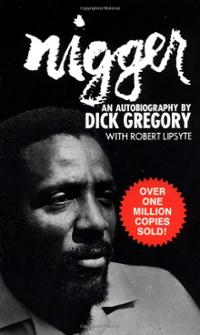
It seems that folk no longer read comedian and activist Dick Gregory’s 1964 autobiography Nigger—actually, I don’t remember the Malcolm X t-shirt wearing, Public Enemy listening generation of mine discussing the work either. The 1990s political climate may have informed my decision to seek out this book. The back cover told a profoundly moving story that fueled my curiosity about the many everyday expressions of radicalism, thoughtfulness, historical rootedness, and political acumen that I observed from the folk in my own life. Gregory writes:
Good evening, ladies and gentlemen. I understand there are a good many Southerners in the room tonight. I know the South very well. I spent 20 years there one night…
Last time I was down South I walked into this restaurant, and this white waitress came up to me and said: ‘We don’t serve colored people here.’
I said: ‘That’s all right, I don’t eat colored people. Bring me a whole fried chicken.’
About that time these three cousins come in, you know the ones I mean, Klu, Kluck, and Klan, and they say: ‘Boy, we’re givin’ you fair warnin.’ Anything you do to that chicken, we’re gonna do to you.’ About then the waitress brought me my chicken. ‘Remember, boy, anything you do to that chicken, we’re gonna do to you.’ So I put down my knife and fork, and I picked up that chicken, and I kissed it.”
I wonder how those “cousins” looked when they left that restaurant; ready for war, but not for love.
Creativity emerges from the careful cultivation of one’s interior life. In Gregory’s instance, we see how in cultivating a rich interior life and reading the world you live in equips you with the tools to build peace in a world bent on destruction.
Most Georgia schools have started today. My son started first grade. His teacher seems like a warm person. My son looked like he was alright when I left; no crying or clinging. The worst thing that happened today actually began when he first enrolled and I saw the required uniform. Here he is in just the summer version:
This slideshow requires JavaScript.
Lord help this uniform…and it gets worse. The summer version comes in two designs: the one you see and one that’s predominately orange, a warm-up jacket; and a varsity jacket. The winter version is dreadful: one pair of orange and burgundy Addidas; orange and burgundy socks; khaki trousers, long sleeve shirts in the same orange and burgundy version as the short sleeve version; and one entirely black sweatsuit.
Now, the only way this uniform makes sense is if his school were located in the People’s Republic of China and he had been identified as a future Olympian; otherwise, why would you dress “scholars” as athletes? I have never in my life seen a school uniform that didn’t include an oxford shirt and polo option, a tie, a sweater, a blazer, and dress shoes. I don’t understand how this uniform teaches students anything about appropriate attire with respect to the occasion. In this case, the students are only always ready for a workout.
When I was in elementary school, we were required to have our shirts tucked in at all times, blue and white socks only, boys were required to wear ties, and we all were required to cover our white or blue blouses and shirts with a vest or sweater. In high school we wore saddle shoes (until a later change to brown or black shoes), blue, green, or white socks, a vest, a sweater, and a blazer. You could never be in compliance with the uniform code if your shirt wasn’t covered with a vest, sweater, or blazer and all formal assemblies required blazers. Although my son likes his mini-Virginia Tech style workout gear, I think he would’ve also liked something more traditional.
Hopefully, we’ll be selling our house and buying a new one in the next few years so that he can attend a school where students aren’t driven towards athletics and guided towards other intellectual and professional possibilities. Anyway, I hope his day goes better than the look of that uniform…I’ll let you know.
 Last year, Chimamanda Ngozi Adichie created Ifemelu, the protagonist and blogger in her novel “Americanah,” one of the smartest and sharpest chronicles of contemporary life on three continents.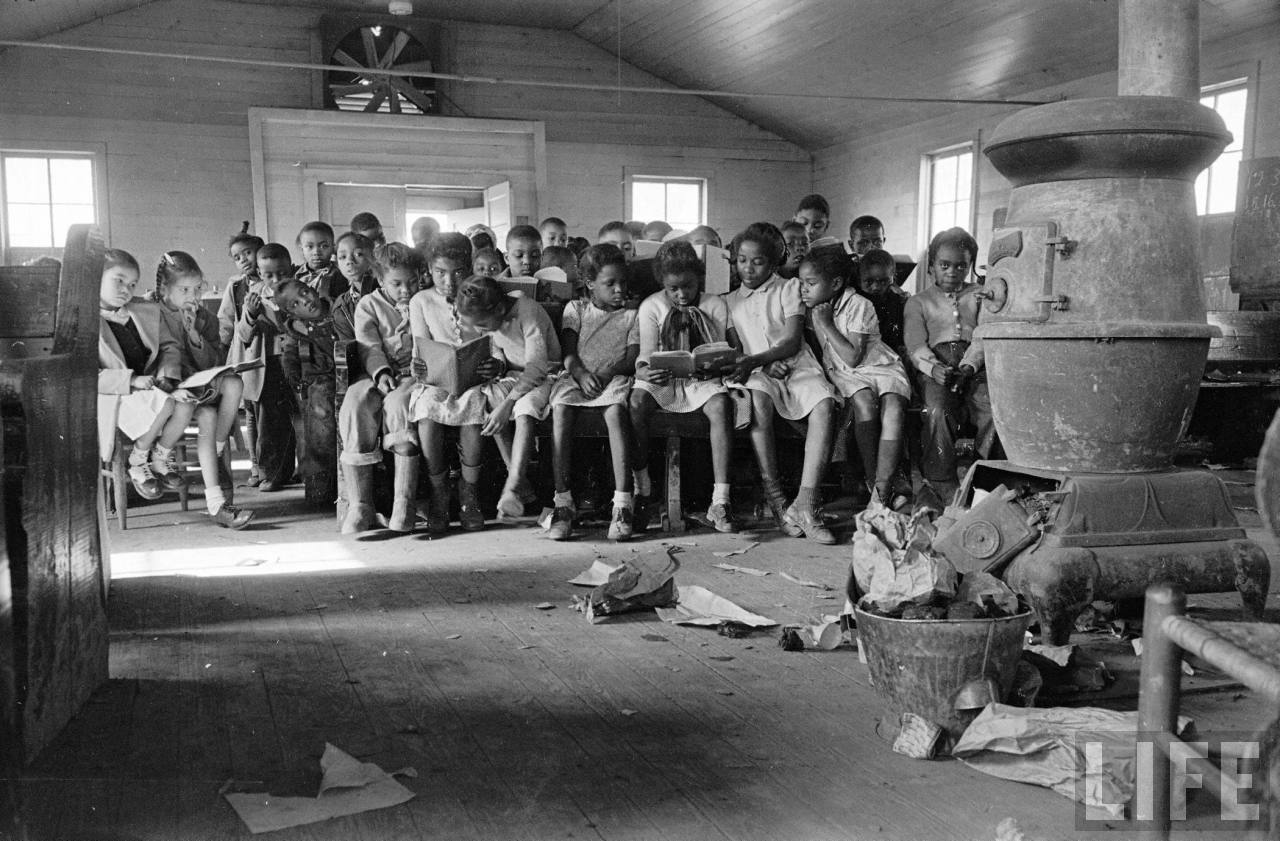


 In Reverie Blog